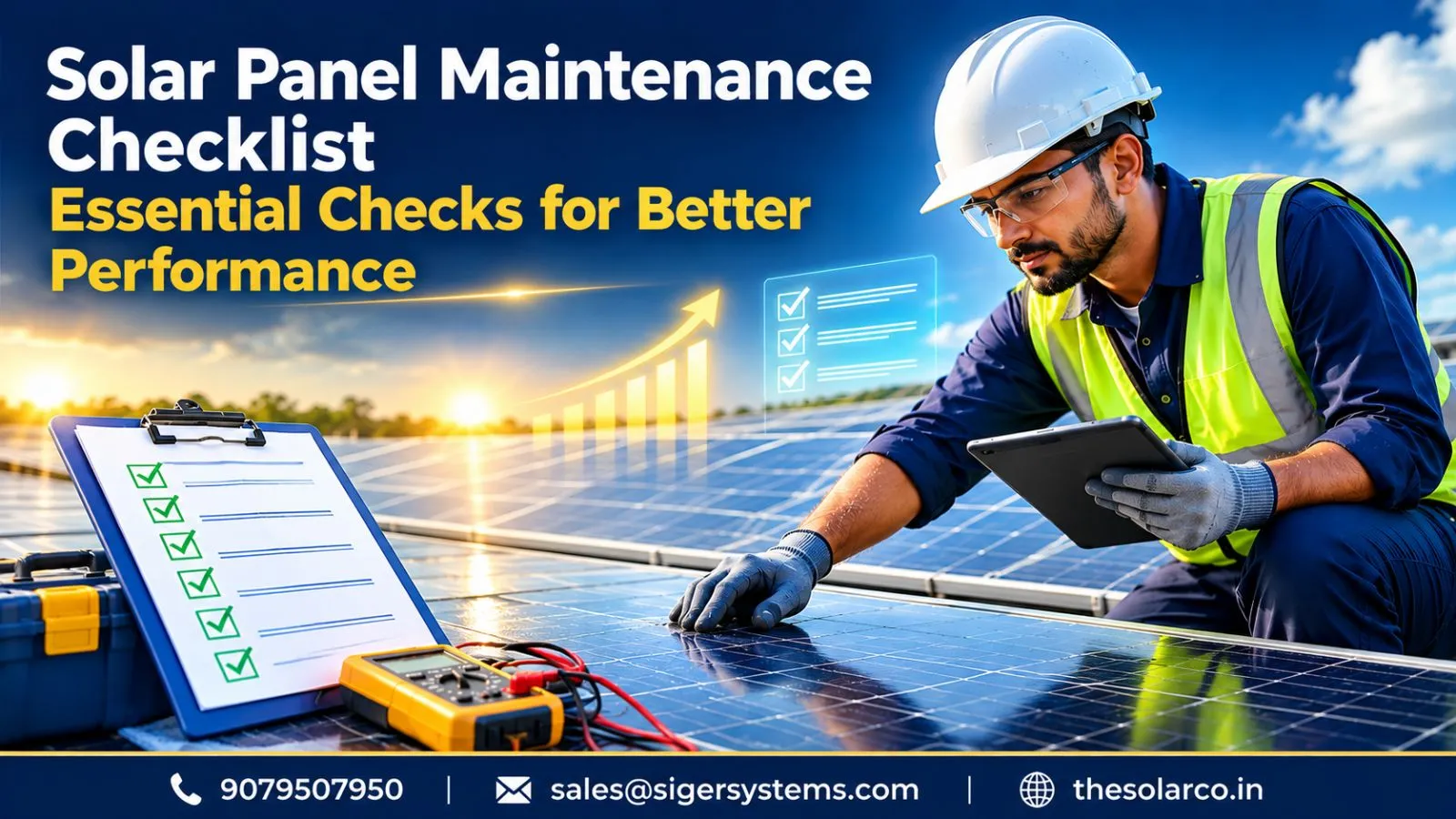
A rooftop solar system is designed to operate for many years, but installing solar panels is only the beginning. Regular inspections and maintenance can help identify performance changes, equipment problems, and physical damage before they become more serious.
A solar panel maintenance checklist gives homeowners and businesses a structured way to review important parts of their solar installation. It can include checking energy generation, inspecting panels, reviewing inverter status, examining cables, and evaluating the mounting structure.
Solar systems generally require less maintenance than many conventional power-generation systems, but they should not be completely ignored after installation.
A planned maintenance routine can help:
- Identify unusual performance changes
- Detect visible equipment damage
- Keep panels reasonably clean
- Monitor inverter operation
- Check mounting structures
- Maintain electrical safety
- Support long-term system reliability
For properties in India, environmental conditions such as dust, heat, rainfall, pollution, and seasonal weather can influence maintenance requirements.
Role of Regular Inspections
Regular inspection helps property owners understand the condition of their solar system.
Some problems may be visible, such as cracked panels or damaged cables, while others may first appear as changes in energy generation.
An inspection can focus on:
- Solar panels
- Inverter
- Mounting structure
- Cables
- Connectors
- Electrical protection equipment
- Monitoring system
The frequency of inspection depends on the installation, equipment, location, and environmental conditions.
Preventing System Failures Through Checks
Maintenance cannot prevent every possible equipment failure, but it can help identify warning signs earlier.
For example, a loose mounting component, damaged cable, or unusual inverter behavior may become more serious if ignored.
Early identification allows a qualified technician to investigate the issue and determine whether repair or replacement is required.
This can be particularly important for commercial systems where prolonged downtime may affect expected energy savings.
Improving Solar Reliability
A well-maintained solar system is easier to monitor and manage.
When owners regularly review performance data and conduct appropriate inspections, they have a better understanding of how the system behaves under different weather and operating conditions.
This creates a useful maintenance cycle:
Monitor → Inspect → Identify → Repair → Verify
The goal is not to perform unnecessary maintenance but to ensure that potential issues are identified and addressed appropriately.
Daily and Monthly Solar System Checks
Not every maintenance activity needs to involve a technician.
Some basic checks can be performed remotely through the solar monitoring platform, while physical inspections should only be conducted when they can be done safely.
Monitoring Electricity Generation
Performance monitoring is one of the simplest ways to keep track of a solar system.
Users can review generation data through the available monitoring application or dashboard.
Depending on the system, they may be able to view:
- Daily electricity generation
- Monthly production
- Historical performance
- Inverter status
- System alerts
- Energy consumption
A single low-production day does not necessarily indicate a problem. Cloud cover, rain, seasonal sunlight variations, and other environmental factors naturally affect generation.
Instead, users should look for unusual or persistent changes in performance.
Checking Visible Panel Conditions
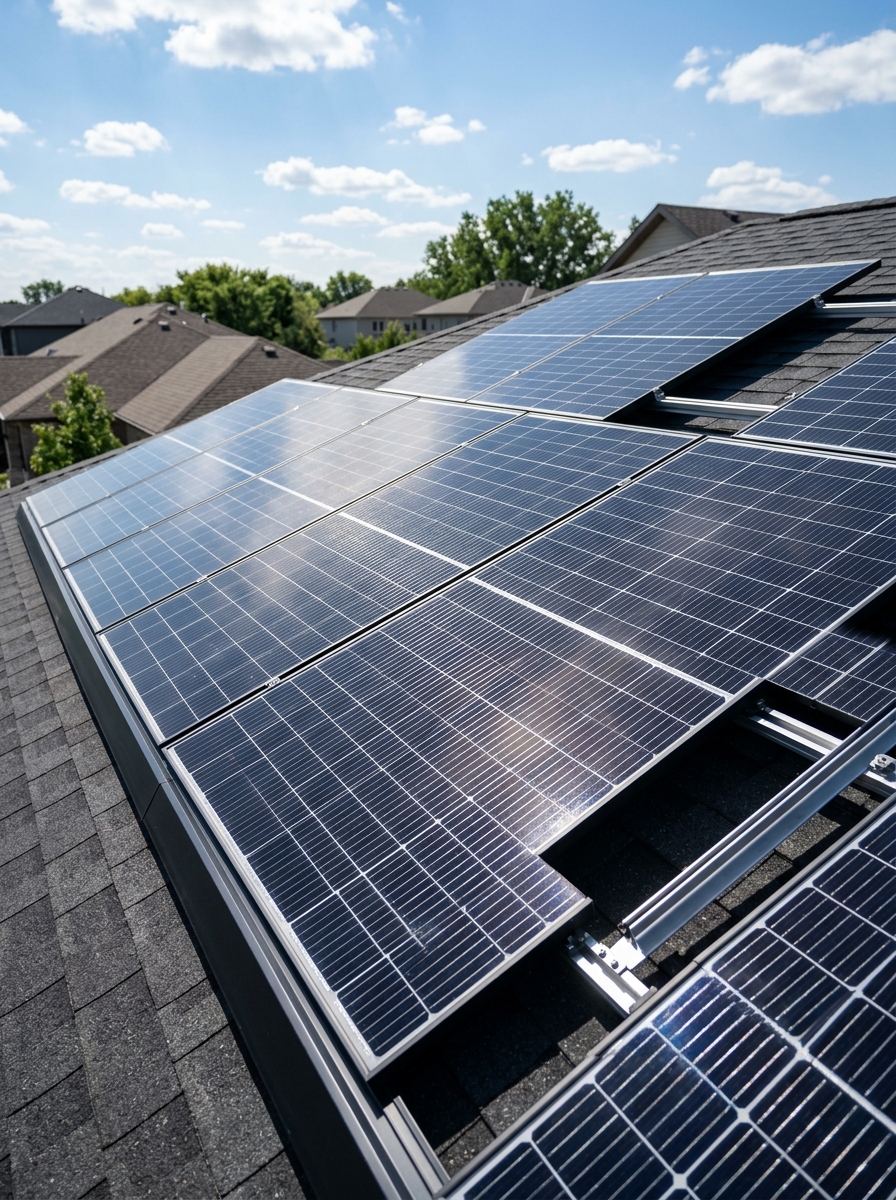
A visual inspection can identify obvious issues without touching the equipment.
Look for:
- Excessive dust
- Leaves
- Bird droppings
- Cracks
- Visible discoloration
- Physical obstructions
- Damaged components
In dusty areas, panels may require cleaning when significant deposits accumulate.
For rooftop systems in places such as Jaipur and other parts of India, dust accumulation can be an important maintenance consideration.
However, homeowners should not climb onto unsafe roofs simply to inspect panels.
Reviewing Inverter Performance
The inverter is a critical part of a solar power system.
Depending on the inverter model, its display or monitoring application may provide information about:
- Current operating status
- Energy generation
- Error messages
- Fault alerts
- Communication status
If an inverter repeatedly displays an error or stops operating normally, the issue should be evaluated by a qualified solar technician.
Users should avoid opening electrical equipment or attempting repairs without the necessary expertise.
Periodic Solar Equipment Inspection
Beyond basic monitoring, solar systems should receive periodic inspection based on their equipment, installation environment, and maintenance requirements.
Checking Cables and Electrical Connections
Cables and electrical connections should be inspected for visible signs of deterioration or damage.
Potential warning signs may include:
- Exposed wiring
- Damaged insulation
- Loose connections
- Connector deterioration
- Signs of overheating
- Physical damage
Electrical inspection should be performed by qualified professionals because solar systems can produce electrical power whenever adequate sunlight is available.
Proper cable management also helps protect wiring from environmental exposure and physical damage.
Inspecting Mounting Structure Condition
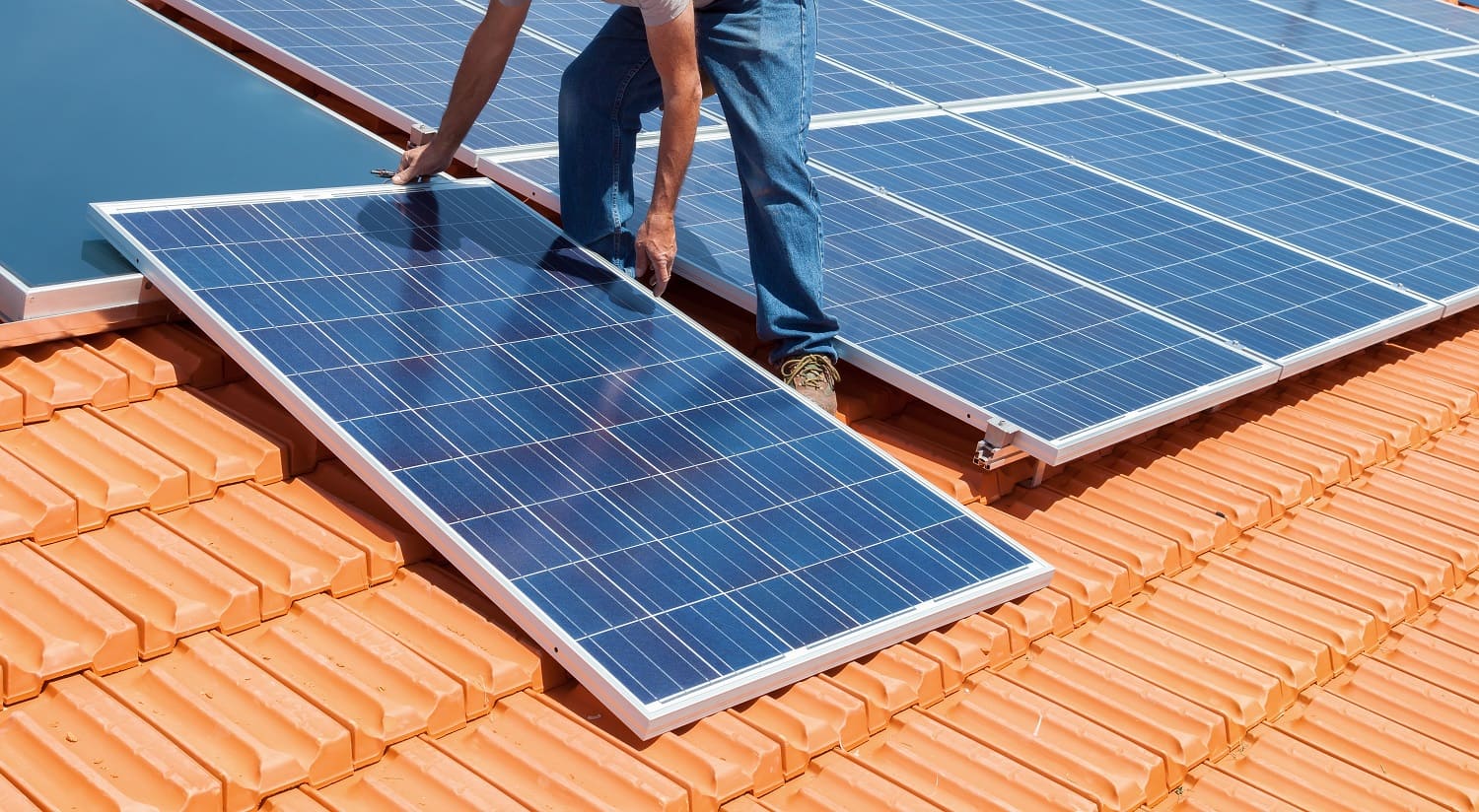
The mounting structure holds solar panels securely in place.
During professional inspections, technicians can check for:
- Loose fasteners
- Corrosion
- Structural damage
- Alignment issues
- Signs of movement
- Roof-related concerns
The mounting structure should remain stable under normal environmental conditions, including wind and rainfall.
Any unusual movement or visible structural problem should be professionally evaluated.
Evaluating Overall System Performance
A maintenance inspection should not focus on individual components alone.
Overall performance should also be evaluated.
Technicians may compare current generation data with historical performance and assess whether the system is operating within expected conditions.
Performance evaluation can consider:
- Energy generation
- Inverter operation
- Panel condition
- Shading
- System losses
- Electrical components
- Monitoring data
This broader approach helps identify issues that may not be obvious from a visual inspection.
Common Issues Found During Maintenance Checks
Regular checks can reveal a variety of issues. Some are simple maintenance matters, while others require professional attention.
Reduced Power Generation Problems
A decline in electricity generation can have multiple causes.
Potential reasons include:
- Dust accumulation
- New shading
- Equipment faults
- Inverter problems
- Electrical issues
- Panel degradation
- Weather conditions
- Monitoring or communication problems
It is important not to assume that low generation automatically means the panels are damaged.
Performance should be compared with relevant historical data and current weather conditions.
Equipment Damage Detection
Solar equipment remains exposed to outdoor conditions for many years.
During maintenance, technicians may identify:
- Cracked panels
- Damaged cables
- Loose mounting components
- Corrosion
- Connector problems
- Physical impact damage
Finding such issues early can make repairs easier and potentially reduce further damage.
Inverter and Wiring-Related Issues
Inverter problems can affect the operation of the entire solar system.
Warning signs can include:
- Repeated error messages
- Unexpected shutdowns
- Unusual system alerts
- Communication failures
- Significant changes in generation
Wiring issues can also affect performance and safety.
Because these are electrical components, diagnosis and repair should be handled by appropriately qualified professionals.
Professional Solar Maintenance Requirements
Some maintenance activities can be handled through basic monitoring, but professional servicing remains important for a complete system assessment.
When Expert Service Is Needed
Professional assistance should be considered when:
- The inverter shows repeated faults
- Energy generation drops unexpectedly
- Panels appear physically damaged
- Cables are damaged
- Mounting structures appear loose
- There are signs of electrical problems
- The system stops generating electricity
- Major weather events have affected the property
If there is a suspected electrical or structural issue, users should avoid attempting DIY repairs.
Benefits of Scheduled Solar Servicing
Scheduled professional servicing provides a more comprehensive evaluation than basic visual checks.
A service visit can include appropriate inspection of:
- Panels
- Inverter
- Wiring
- Connectors
- Mounting structures
- Electrical protection
- System performance
Regular servicing can help identify developing issues and maintain a clearer record of system condition.
For commercial solar installations, scheduled maintenance can be particularly valuable because system downtime may have a direct financial impact.
Maintaining Warranty and System Safety
Solar equipment warranties often include specific terms and conditions.
Property owners should understand the maintenance and installation requirements associated with their equipment.
Using qualified professionals for servicing can help ensure that maintenance is performed appropriately.
It is also important to keep records of:
- Installation details
- Equipment information
- Service visits
- Repairs
- Replacement components
- Performance issues
Good documentation can be useful when troubleshooting equipment or communicating with the manufacturer or service provider.
Solar Panel Maintenance Checklist: Quick Reference
Property owners can use the following checklist as a simple reference:
| Check | What to Look For |
|---|---|
| Energy generation | Unexpected or persistent production changes |
| Panel surface | Dust, bird droppings, leaves or visible damage |
| Inverter | Error messages, alerts or unusual operation |
| Cables | Visible damage or exposed wiring |
| Connectors | Signs of deterioration or loose connections |
| Mounting structure | Corrosion, movement or loose components |
| Shading | New trees, construction or rooftop obstructions |
| Monitoring system | Communication and data availability |
| Cleaning | Significant dirt accumulation |
| Professional inspection | Electrical, structural or technical concerns |
This checklist should be treated as a general maintenance guide. The actual requirements of a solar system depend on its equipment, installation, location, and manufacturer recommendations.
For homeowners and businesses, combining basic monitoring with periodic professional inspection provides a practical approach to long-term solar maintenance.
Final Thoughts
A solar panel maintenance checklist helps homeowners and businesses approach solar maintenance systematically instead of waiting for a system failure. Monitoring electricity generation, checking inverter status, observing visible panel conditions, and identifying changes in shading or performance can provide useful early information. Professional inspections should also cover electrical connections, cables, mounting structures, and overall system performance. Regular attention is particularly valuable in regions where dust, heat, pollution, or severe weather can affect rooftop solar equipment.
Solar maintenance does not have to be complicated, but it should be consistent and appropriate for the system. Property owners should follow manufacturer recommendations, avoid unsafe electrical or rooftop work, and contact qualified professionals when technical problems occur. For residential and commercial installations across India, including Jaipur, combining monitoring with scheduled servicing can support reliable energy generation and help identify potential issues before they become larger problems. A proactive maintenance approach can ultimately protect the performance and long-term value of a solar investment.
Frequently Asked Questions About Solar Panel Maintenance
1. How often should solar panels be maintained?
The required maintenance frequency depends on the system, location, environmental conditions, equipment, and manufacturer recommendations. Basic performance monitoring can be performed regularly, while physical and electrical inspections should be scheduled according to the system’s requirements and handled by qualified professionals.
2. What should I check regularly on my solar system?
Regular checks can include electricity generation, monitoring alerts, visible panel condition, inverter status, and obvious shading or obstructions. Electrical connections, cables, and mounting structures should generally be inspected by qualified professionals.
3. What happens if solar panels are not maintained?
Lack of maintenance can allow problems such as excessive soiling, equipment damage, loose components, or performance issues to remain unnoticed. Not every maintenance issue causes immediate failure, but delayed attention can potentially increase downtime or repair requirements.
4. Does solar panel maintenance include cleaning?
Cleaning can be part of solar maintenance when significant dust, dirt, bird droppings, or other deposits accumulate. However, maintenance also involves monitoring performance and inspecting components such as the inverter, cables, connectors, and mounting structure.
5. Can I perform solar panel maintenance myself?
Basic monitoring and safe ground-level visual checks may be possible for property owners. However, rooftop work, electrical inspections, inverter repairs, and structural assessments should be handled by appropriately qualified professionals to reduce safety risks and protect the system.