
Investing in a solar power system is a major financial decision for homeowners and businesses in India. While solar energy can reduce electricity expenses and support clean energy adoption, the initial installation cost is an important consideration. This is where the solar payback period becomes useful.
The solar payback period refers to the estimated time required to recover the initial investment in a solar system through electricity savings and other applicable financial benefits. For example, if a solar system costs ₹2,00,000 and generates annual savings of ₹40,000, the simple payback period would be approximately five years.
However, actual payback depends on several factors, including system cost, electricity consumption, solar generation, electricity tariffs, available subsidies, location, and maintenance expenses.
This guide explains what the solar payback period means, how to calculate it, which factors affect it, and how homeowners and businesses in India can potentially improve their solar investment recovery time.
What Is Solar Payback Period?
The solar payback period is the estimated time required for the financial savings generated by a solar power system to recover its initial investment.
It is usually expressed in years.
A shorter payback period means the initial investment may be recovered faster. Once the investment has been recovered, the electricity savings generated by the system can contribute to long-term financial benefits, although maintenance and other operating costs should still be considered.
The payback period is a useful metric for comparing different solar system options and understanding the potential financial value of switching from conventional electricity to solar power.
Understanding the Meaning of Solar Payback Period
In simple words, the solar payback period answers one important question:
How many years will it take for my solar savings to recover the amount I invested in the system?
For example, suppose a homeowner invests ₹2,00,000 in a rooftop solar system and receives ₹40,000 in annual electricity savings.
The simple calculation would be:
Solar Payback Period = Initial Investment ÷ Annual Solar Savings
₹2,00,000 ÷ ₹40,000 = 5 years
Therefore, the estimated simple payback period would be five years.
However, real-world calculations can be more complex. Electricity tariffs may change, solar generation varies throughout the year, and maintenance or financing costs may affect the overall return.
For this reason, the simple payback period should be treated as an estimate rather than a guaranteed financial outcome.
Why Payback Period Matters Before Installing Solar
Installing solar is a long-term investment. Understanding the expected payback period can help homeowners and businesses evaluate whether the project fits their financial goals.
A payback calculation can help you:
- Estimate how quickly the initial investment may be recovered
- Compare different solar system capacities
- Evaluate installation quotations
- Understand potential electricity savings
- Plan long-term energy expenses
- Compare solar investment with continued grid electricity costs
For businesses, the payback period can also help with capital investment decisions.
For example, a company may compare the expected return from a rooftop solar system with other potential investments.
However, payback should not be the only consideration. Solar can also provide benefits such as reduced dependence on grid electricity, greater energy independence, protection against rising electricity tariffs, and support for renewable energy goals.
Difference Between Investment and Long-Term Savings
The total solar investment includes more than the cost of solar panels.
Depending on the project, the initial investment may include:
- Solar panels
- Solar inverter
- Mounting structure
- Solar cables
- Electrical protection equipment
- Installation charges
- System design and engineering
- Approvals and documentation
- Battery storage, if required
The long-term savings depend on how much electricity the system generates and how much of that electricity is used by the property.
For example, a rooftop solar system that generates electricity during the day may reduce the amount of power purchased from the grid. Depending on the applicable electricity regulations and metering arrangement, surplus generation may also be exported to the grid.
The investment recovery period focuses on recovering the initial cost, while the total financial benefit considers savings generated throughout the solar system’s operating life.
How to Calculate Solar Payback Period
Calculating the simple solar payback period requires comparing the net investment with the expected annual financial savings.
The basic formula is:
Solar Payback Period = Net Solar Investment ÷ Annual Solar Savings
For a more accurate calculation, you may also consider subsidies, electricity tariffs, maintenance costs, financing expenses, solar generation, and changes in electricity consumption.
Factors Included in Payback Calculation
Several factors influence the solar payback calculation.
The most important include:
- Total solar system and installation cost
- Applicable government subsidy or financial benefit
- Annual solar electricity generation
- Electricity tariff
- Monthly electricity consumption
- Direct solar energy consumption
- Value of exported electricity
- Maintenance expenses
- Financing and interest costs
For example, suppose a rooftop solar system costs ₹2,50,000 and the homeowner receives an eligible subsidy of ₹78,000.
The net investment becomes:
₹2,50,000 − ₹78,000 = ₹1,72,000
If the system generates annual savings of ₹40,000:
₹1,72,000 ÷ ₹40,000 = 4.3 years
The estimated simple payback period would therefore be approximately 4.3 years.
Actual payback may vary depending on electricity consumption, solar generation, tariff changes, maintenance, and other factors.
Electricity Savings and Solar Generation Impact
The amount of electricity generated by a solar system directly affects potential savings.
Solar generation depends on:
- Solar system capacity
- Panel efficiency
- Location
- Rooftop orientation
- Panel tilt
- Shading
- Weather conditions
- System performance
- Maintenance
India receives significant solar energy potential, but generation varies across regions and seasons.
A well-designed rooftop system in an area with good sunlight exposure may generate more electricity than a similarly sized system affected by shading or poor rooftop conditions.
Energy consumption patterns also influence savings.
For example, a home that uses more electricity during daylight hours may directly consume a larger portion of its solar generation. This can improve the financial value of the electricity produced.
Understanding Simple Solar Return Calculations
Consider the following example:
Solar System Cost: ₹3,00,000
Applicable Subsidy: ₹78,000
Net Investment: ₹2,22,000
Estimated Annual Electricity Savings: ₹50,000
Using the simple payback formula:
₹2,22,000 ÷ ₹50,000 = 4.44 years
The estimated simple payback period would be approximately 4.4 years.
This calculation provides a basic estimate and does not include factors such as financing costs, maintenance, system degradation, or changes in electricity tariffs.
For larger residential, commercial, and industrial projects, businesses may use more detailed financial metrics such as net present value and internal rate of return.
Factors That Affect Solar Payback Time
Solar payback periods can vary significantly between properties.
A system installed in one Indian city may have a different payback period from a similar system installed elsewhere because of differences in electricity tariffs, sunlight availability, consumption patterns, and installation costs.
Solar System Size and Installation Cost
The size of the solar system affects both the initial investment and potential electricity generation.
A larger system generally requires a higher upfront investment but can produce more electricity.
However, installing a system that is significantly larger than the property’s actual energy requirements may not always provide the best financial outcome.
The ideal solar capacity should be based on:
- Historical electricity consumption
- Monthly electricity bills
- Rooftop space
- Solar generation potential
- Future electricity requirements
- Budget
- Applicable regulations
A professional solar assessment can help determine the appropriate system capacity.
Electricity Rates and Monthly Consumption
Electricity tariffs have a direct impact on solar payback.
If a property pays a higher rate for grid electricity, each unit of solar electricity consumed may provide greater financial savings.
Consumption patterns also matter.
For example, a home that uses most of its electricity during the day may be able to consume more solar power directly.
A business operating during daylight hours may also benefit from high solar self-consumption.
Battery storage can help shift solar electricity to evening hours, but the cost of purchasing and installing batteries should be included when calculating the overall payback.
Location and Sunlight Availability Impact
Solar generation varies across India based on location and site conditions.
Factors that influence generation include:
- Solar irradiation
- Seasonal weather
- Rooftop orientation
- Panel tilt
- Shading
- Dust and environmental conditions
Even two properties in the same city may have different solar payback periods because their rooftops may differ in orientation, usable area, and shading.
A professional site survey can help estimate expected solar generation and identify potential obstacles before installation.
How to Reduce Solar Payback Period
Property owners can take several steps to improve the financial performance of their solar investment.
The objective should not simply be to install the largest possible system. Instead, the focus should be on selecting the right capacity, controlling the initial investment, and maximising the useful consumption of solar electricity.
Choosing the Right Solar System Capacity
Correct system sizing is one of the most important factors in achieving a reasonable payback period.
An undersized system may not generate enough electricity to significantly reduce grid consumption.
An oversized system may increase the upfront investment without delivering proportional financial benefits.
The right capacity should be determined using historical electricity bills and future energy requirements.
For example, a homeowner planning to purchase an electric vehicle or install additional appliances may need to consider future electricity consumption when planning the solar system.
Improving Solar Energy Usage Efficiency
Maximising the use of solar electricity can improve the financial value of a solar installation.
Homeowners can schedule high-energy appliances during daylight hours when solar generation is available.
Businesses can also plan energy-intensive operations during periods of strong solar production.
Other strategies include:
- Running appliances during daylight hours
- Charging electric vehicles during solar generation periods
- Using smart energy management systems
- Improving overall energy efficiency
- Reducing unnecessary electricity consumption
The greater the proportion of solar electricity consumed directly, the more valuable the generated energy can be, depending on the applicable electricity tariff and export arrangement.
Using Available Financial Benefits
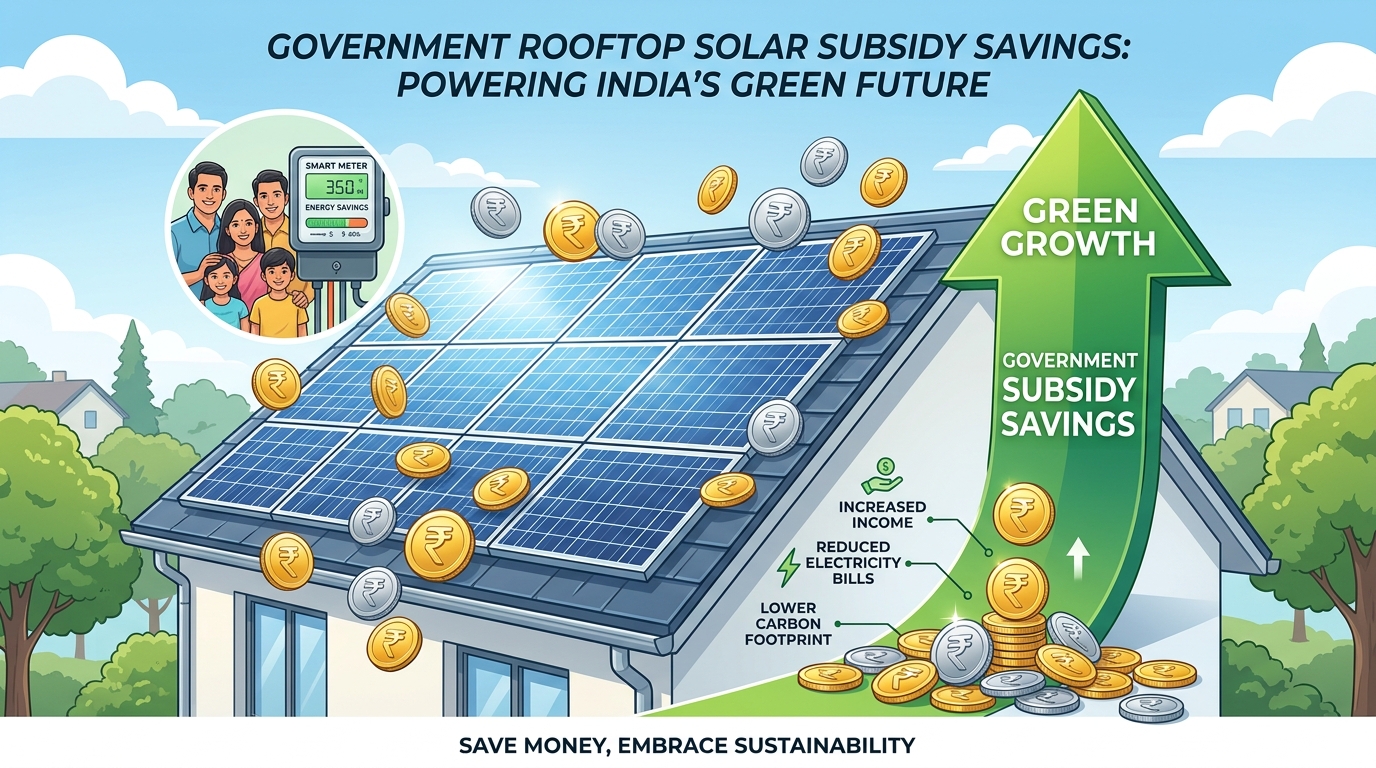
Government schemes and financial incentives can reduce the effective cost of solar installation and potentially shorten the payback period.
Depending on eligibility and applicable policies, homeowners may benefit from:
- Government subsidies
- Rooftop solar schemes
- Net metering arrangements
- Financing options
- Other applicable incentives
For residential rooftop solar installations, eligible households should check the latest official information regarding the PM Surya Ghar: Muft Bijli Yojana and applicable subsidy provisions before calculating the net investment.
Because government policies and eligibility requirements can change, users should verify the current terms through official sources before including subsidies in their financial calculations.
Why Solar Payback Makes Solar a Smart Investment
Solar energy can offer financial benefits beyond reducing monthly electricity bills.
Once the initial investment is recovered, the system may continue generating electricity for many additional years.
The exact financial outcome depends on system performance, electricity prices, maintenance costs, and local regulations.
Long-Term Financial Advantages
A solar system can help reduce dependence on grid electricity.
For homeowners, this may provide greater control over household energy expenses.
For businesses, solar can potentially reduce operating costs and improve energy cost predictability.
Long-term financial benefits may include:
- Reduced electricity expenses
- Greater energy independence
- Lower dependence on conventional electricity
- Potential protection against future tariff increases
- Long-term renewable energy generation
However, users should evaluate these benefits against the total investment and expected system performance.
Comparing Solar Savings With Electricity Expenses
One of the most useful ways to evaluate solar is to compare the cost of continuing to purchase electricity from the grid with the cost of generating electricity through solar.
For example, suppose a household currently spends ₹36,000 per year on electricity.
If a rooftop solar system can generate annual savings of ₹30,000, the system could significantly reduce the household’s electricity expenses.
However, solar may not eliminate electricity bills completely.
Grid electricity may still be required during nighttime or periods when solar generation is insufficient.
Therefore, the calculation should be based on actual historical electricity consumption and realistic solar generation estimates.
Future Value of Renewable Energy Investment
The financial value of solar can extend beyond the initial payback period.
Electricity tariffs may increase over time, potentially increasing the value of electricity generated by an existing solar system.
At the same time, technologies such as battery storage, smart energy management, and electric vehicle charging may create new opportunities for solar users.
For businesses, renewable energy investments may also support sustainability goals and environmental commitments.
The combination of financial savings, energy independence, and environmental benefits can make solar an attractive long-term investment.
Conclusion
The solar payback period is an important financial metric for homeowners and businesses considering solar energy in India. It provides a simple way to estimate how long it may take for electricity savings and other applicable benefits to recover the initial installation investment.
However, payback should not be the only measure used to evaluate a solar project. A complete financial assessment should consider system capacity, installation cost, electricity consumption, sunlight availability, electricity tariffs, applicable subsidies, maintenance requirements, financing costs, and future energy needs.
Choosing the right system size is particularly important. A properly designed solar installation can balance the initial investment with expected energy generation and savings. Increasing direct solar consumption can also improve the value of the electricity generated by the system.
For homeowners and businesses, solar can provide long-term financial benefits by reducing electricity expenses and increasing energy independence. However, actual returns vary from one property to another.
Before investing, users should review their electricity bills, obtain detailed solar quotations, and request realistic estimates of system generation and annual savings. A professional solar assessment can help identify the right system configuration.
When carefully planned and professionally installed, solar energy can provide both financial and environmental benefits throughout its operating life. Understanding the payback period helps property owners make informed decisions and evaluate whether a solar investment aligns with their long-term energy and financial objectives.
Frequently Asked Questions About Solar Payback Period
1. What is a solar payback period?
The solar payback period is the estimated time required for electricity savings and other applicable financial benefits to recover the initial investment made in a solar power system.
2. How do I calculate my solar payback period?
Use the basic formula: Solar Payback Period = Net Solar Investment ÷ Annual Solar Savings. For a more accurate calculation, consider subsidies, electricity tariffs, maintenance, financing costs, and expected system performance.
3. What factors can shorten the solar payback period?
Lower installation costs, higher electricity tariffs, strong solar generation, correct system sizing, increased solar self-consumption, and eligible government incentives can potentially shorten the payback period.
4. Does battery storage affect solar payback?
Yes. Batteries can increase solar self-consumption and provide backup power, but their additional purchase and installation costs increase the initial investment. Battery costs and expected savings should therefore be included in the financial calculation.
5. Is solar financially worthwhile after the payback period?
A solar system can continue generating electricity after the initial investment has been recovered. The financial benefits after payback depend on electricity savings, system performance, maintenance costs, and the remaining operating life of the equipment.