Residential solar energy in India is becoming an increasingly practical solution for households looking to reduce electricity expenses and adopt cleaner energy. Rising power consumption, changing electricity tariffs, and government support have encouraged homeowners to consider rooftop solar installations. A properly designed home solar system can generate electricity from sunlight, reduce dependence on conventional power sources, and provide long-term financial benefits. From independent houses and villas to modern residential buildings, solar technology offers flexible solutions for different household requirements. Understanding available systems, installation factors, financial benefits, and future developments can help homeowners make informed decisions before investing in solar power.
Growth of Residential Solar Energy in India
India has significant solar energy potential because many regions receive abundant sunlight throughout the year. Residential rooftop installations are becoming an important part of the country’s renewable energy transition. Homeowners are increasingly exploring ways to generate electricity directly from their rooftops instead of depending entirely on grid electricity.
Increasing Adoption of Home Solar Systems
The adoption of residential solar systems has increased as homeowners become more aware of electricity savings and renewable energy opportunities. Improved solar panel technology, efficient inverters, and simplified installation processes have made rooftop solar more accessible.
Government initiatives have also encouraged households to consider solar power. The PM Surya Ghar: Muft Bijli Yojana, launched in February 2024, aims to support rooftop solar installations across one crore households. It provides eligible residential consumers with central financial assistance for qualifying systems.
Under the central subsidy structure, eligible households can receive ₹30,000 per kW for the first 2 kW and ₹18,000 for the additional 1 kW, with the total subsidy capped at ₹78,000 for systems of 3 kW or above. Actual eligibility and assistance depend on applicable scheme guidelines.
These developments have increased awareness of rooftop solar as a practical household investment rather than simply an alternative energy technology.
Reasons Behind Solar Popularity in Indian Homes
Electricity consumption in Indian households varies according to family size, location, weather, and appliance usage. Air conditioners, refrigerators, water heaters, washing machines, and other appliances can increase monthly electricity expenses.
Solar power allows households to generate electricity during daylight hours and use it for their regular requirements. Depending on system capacity and consumption patterns, this can significantly reduce electricity purchased from the grid.
Other reasons behind growing adoption include:
- Increasing awareness of renewable energy.
- Availability of government subsidy support for eligible households.
- Better solar panel and inverter technology.
- Improved rooftop installation methods.
- Long-term opportunities for electricity cost savings.
- Growing interest in energy independence.
For homeowners in Rajasthan, strong sunlight makes rooftop solar worth evaluating, although actual generation depends on roof orientation, shading, weather, and system design.
Role of Renewable Energy Awareness
Renewable energy awareness helps households understand how electricity generation affects the environment and why cleaner alternatives matter. Solar panels generate electricity without directly burning fossil fuels during operation.
As more people learn about carbon emissions, energy conservation, and sustainable living, residential solar becomes an attractive option for environmentally conscious families.
Awareness also helps homeowners make better purchasing decisions. Understanding panel efficiency, inverter capacity, warranties, maintenance, and installation quality reduces the possibility of choosing equipment based only on low prices.
Benefits of Installing Solar at Home
Installing solar panels offers financial, environmental, and practical benefits. The overall value depends on household electricity consumption, available rooftop space, system capacity, and the type of solar configuration selected.
Reducing Household Electricity Expenses
One of the biggest advantages of residential solar power is the potential reduction in monthly electricity expenses. Solar panels generate electricity during daylight hours, allowing households to use their own generated power instead of purchasing the same amount entirely from the electricity grid.
In grid-connected systems, net metering can allow eligible consumers to export surplus electricity to the grid. The exported and imported electricity is adjusted according to applicable electricity regulations and billing arrangements.
The amount saved depends on several factors:
- Monthly electricity consumption.
- Installed solar system capacity.
- Daily sunlight availability.
- Household electricity usage patterns.
- Local electricity tariffs.
- Applicable net-metering regulations.
For example, a household with substantial daytime electricity consumption may use a larger share of its solar generation directly. Homes with lower daytime consumption may export more surplus electricity, depending on their connection and net-metering arrangements.
Homeowners should compare expected annual generation with their electricity bills before deciding the appropriate system size. Solar should be planned around actual consumption rather than selecting capacity only on the basis of available rooftop space.
Creating Sustainable Energy Solutions
Solar energy supports sustainable electricity generation by using sunlight, a renewable natural resource. Unlike conventional electricity generation based on fossil fuels, rooftop solar does not require direct fuel combustion during normal operation.
Residential installations can contribute to reducing the environmental impact associated with household electricity consumption.
Solar panels also offer long operating lives when installed and maintained correctly. Many manufacturers provide long-term performance warranties, although product warranties and actual equipment lifespans differ.
For families interested in sustainable living, solar power can become part of a wider approach to responsible energy use. Combining rooftop generation with energy-efficient appliances, LED lighting, and sensible electricity consumption can improve overall household energy performance.
Improving Energy Security
Generating electricity at home can reduce dependence on conventional grid supply. However, the level of energy independence depends on the solar system configuration.
An on-grid system normally shuts down during a grid outage for safety reasons unless it includes an approved backup arrangement. Therefore, standard grid-connected solar panels should not automatically be considered an uninterrupted backup solution.
Hybrid and off-grid systems can provide additional energy security through compatible battery storage.
A hybrid solar system can store surplus electricity in batteries and make stored power available when required, subject to battery capacity and inverter configuration.
This can be particularly useful for households that experience frequent power interruptions or need backup for essential appliances. Homeowners should calculate backup requirements carefully because running air conditioners, pumps, and other high-power appliances requires greater storage capacity.
Solar Solutions Available for Indian Homes
Different households have different electricity requirements, roof layouts, and backup expectations. Selecting an appropriate configuration is important for achieving reliable performance and suitable financial returns.
Rooftop Solar Systems
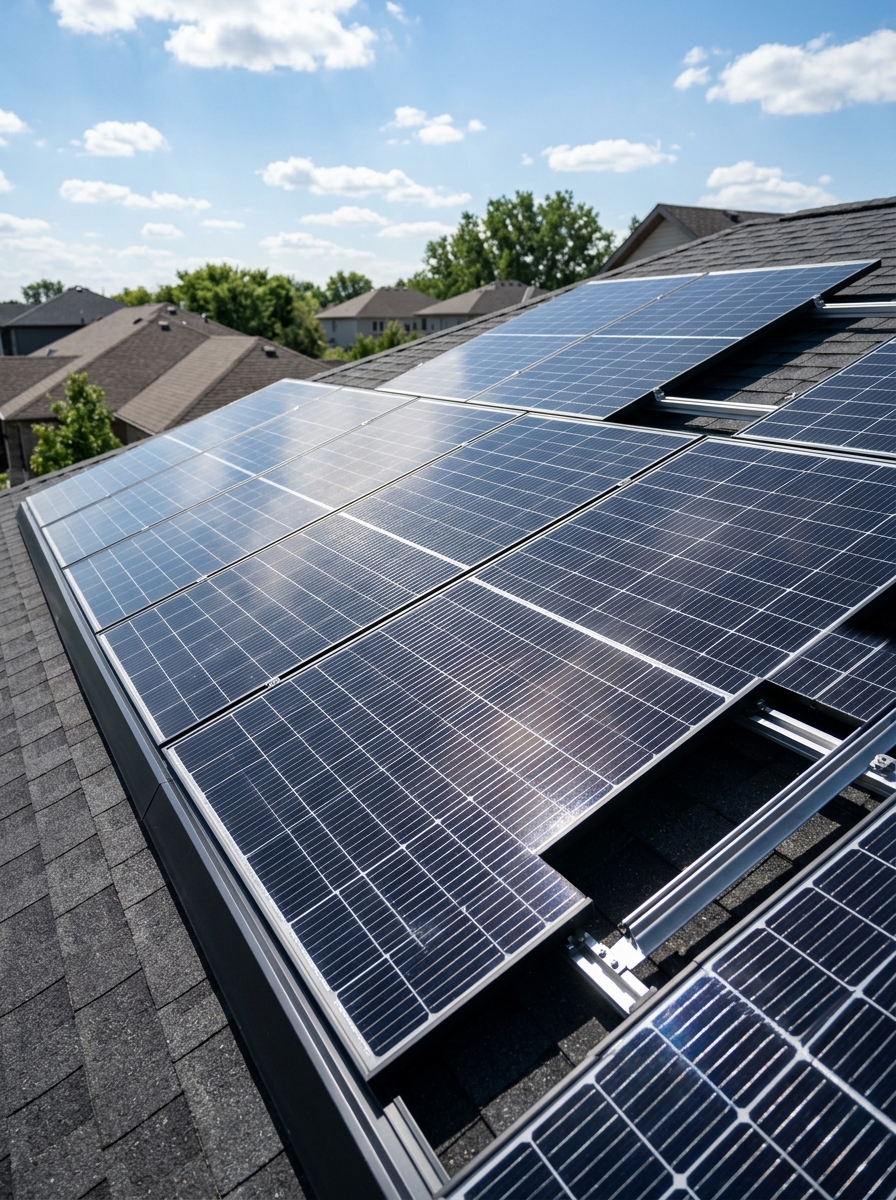
A rooftop solar system uses photovoltaic panels installed on a house roof or terrace to generate electricity from sunlight. The generated DC electricity passes through an inverter, which converts it into AC electricity suitable for household appliances.
The three common configurations include:
On-grid solar systems: These systems connect to the electricity grid and generally use net metering where approved. They are suitable for homes with reliable grid connections that primarily want to reduce electricity expenses.
Off-grid solar systems: These systems operate independently of the utility grid and generally require battery storage. They can be considered for locations where grid electricity is unavailable or unreliable.
Hybrid solar systems: These combine grid connectivity with battery storage, allowing households to use solar generation, store surplus electricity, and access backup power when required.
The correct configuration depends on electricity availability, backup expectations, budget, and local regulations.
Solar Backup and Storage Solutions
Battery storage is useful for households that want access to stored solar electricity outside daylight hours or during grid interruptions.
During periods of solar generation, compatible systems can charge batteries using surplus electricity. The stored energy can then support selected household loads when solar generation is insufficient.
Lithium-ion batteries are commonly considered for modern residential storage because of their energy density, charging characteristics, and integration with compatible inverter systems.
Before purchasing a solar backup solution, homeowners should evaluate:
- Required backup duration.
- Essential appliances to be supported.
- Total connected load.
- Battery usable capacity.
- Inverter compatibility.
- Battery warranty and safety features.
A battery system should be sized according to actual usage. Oversizing storage without a clear requirement can increase project costs, while undersizing may result in insufficient backup.
Customized Residential Solar Options
A customized solar solution considers the property’s specific requirements rather than using the same design for every household.
For example, a small family using limited electricity may need a different system from a large home with multiple air conditioners and water pumps.
Roof structure, available installation area, shading, orientation, and future electricity demand also influence system design.
A professional residential solar panel installation should include a site survey, electricity consumption assessment, panel layout planning, inverter selection, electrical protection, and commissioning.
The Solar Co. provides customized rooftop solar solutions, including on-grid and hybrid configurations, along with installation and assistance with applicable subsidy and net-metering processes. Homeowners can explore its residential solar installation services to understand available home solar options.
Factors Affecting Residential Solar Adoption and Future Opportunities
Although residential solar offers several advantages, homeowners should evaluate practical installation requirements and future energy needs before making an investment. Understanding these factors helps create a system that delivers dependable performance over its operating life.
Electricity Usage and Home Requirements
Household electricity consumption is one of the most important factors in selecting solar capacity. Reviewing electricity bills from the previous 12 months provides a useful understanding of seasonal consumption patterns.
Homeowners should also identify appliances that operate during daylight hours and those that require backup during outages.
For example, a household with high daytime consumption may benefit from a system designed to maximize direct solar electricity use. A family requiring evening backup may need a hybrid configuration with suitable battery storage.
System sizing should also account for potential changes in electricity demand, such as purchasing an electric vehicle, adding air conditioning, or expanding the property.
Rooftop Availability and Location
The available roof area determines how many solar panels can be installed. However, usable space is more important than the total roof area.
Shadows from nearby buildings, trees, water tanks, and other structures can affect electricity generation. Roof direction, panel tilt, structural strength, and weather exposure should also be evaluated.
In cities such as Jaipur, Jodhpur, and Udaipur, solar installations can benefit from favourable sunlight conditions. However, dust accumulation and high summer temperatures make suitable equipment selection and periodic cleaning important.
For larger homes, elevated mounting structures may help improve panel placement while preserving usable terrace space.
Investment Planning and System Selection
The initial investment depends on system capacity, panel technology, inverter type, mounting structure, electrical equipment, and installation requirements.
Eligible residential consumers should also consider applicable government assistance under the PM Surya Ghar scheme when estimating project costs. Subsidy amounts, application procedures, and eligibility requirements should be verified through the current official process before installation.
A reliable solar company in Jaipur can help homeowners evaluate equipment, installation quality, project documentation, and after-sales support. Businesses planning larger commercial solar projects may also explore separate commercial solar solutions designed around institutional electricity requirements.
Increasing Demand for Clean Energy
The future of residential solar energy in India is closely connected with rising electricity demand and the country’s renewable energy goals.
As more households adopt electric appliances, electric vehicles, and energy-efficient technologies, demand for reliable electricity is likely to increase.
Rooftop solar can help households generate a portion of their electricity locally and reduce their exposure to conventional power costs.
Growth of Smart Solar Technologies
Modern solar systems increasingly use smart inverters, digital monitoring platforms, and energy management technologies.
These solutions allow homeowners to track electricity generation, monitor system performance, and identify potential operational problems.
Battery integration and intelligent energy management can also help households decide when to use solar electricity, store surplus energy, or draw power from the grid.
As technology develops, residential systems are expected to offer better monitoring, improved integration, and more flexible energy management options.
Long-Term Opportunities for Homeowners
Residential solar offers an opportunity to turn unused rooftop space into a productive electricity-generating asset. Its long-term value depends on installation quality, system performance, maintenance, electricity tariffs, and the household’s energy consumption.
Homeowners who plan their systems carefully can benefit from reduced grid dependence, cleaner electricity generation, and more predictable household energy expenses.
Choosing suitable panels, inverters, mounting structures, and installation professionals is essential for achieving these benefits.
The Solar Co. supports residential and larger solar project requirements through customized system design, equipment selection, and installation services. With proper planning and informed decisions, solar energy can become a practical part of India’s transition towards cleaner and more sustainable homes.