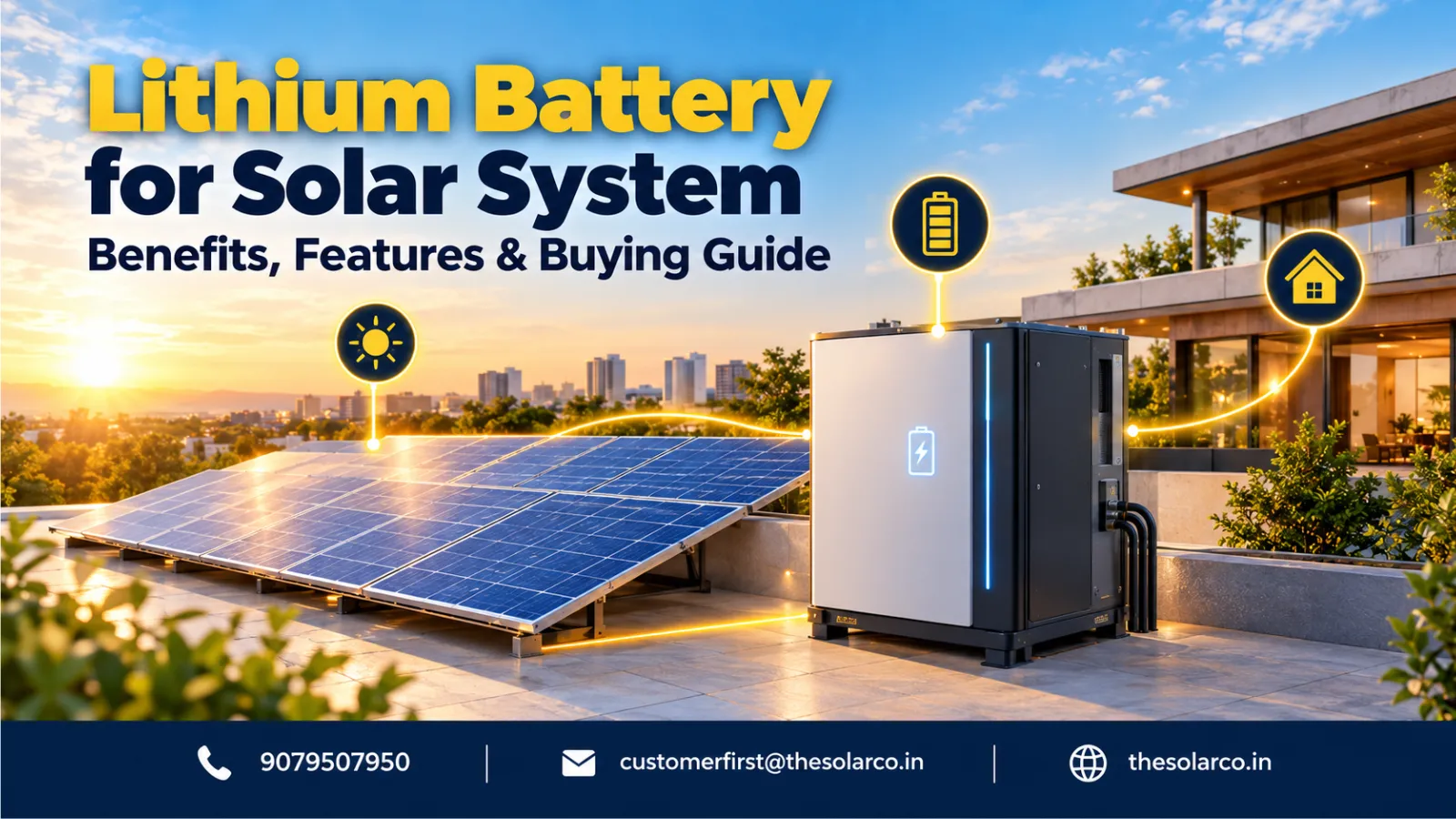
A lithium battery for a solar system stores electricity generated by solar panels so it can be used when sunlight is unavailable or solar production is insufficient. These batteries are widely used in residential and commercial energy storage because they offer high usable capacity, efficient charging, and compact designs compared with many traditional battery technologies.
Lithium-ion batteries include different chemistries, each with distinct characteristics. Lithium iron phosphate (LFP) is commonly considered for stationary solar storage because of its thermal stability and cycle-life potential. Other lithium-ion chemistries may have different energy-density, cost, and performance characteristics.
A solar battery is more than a storage container. A complete installation typically includes battery cells, a battery management system (BMS), compatible power electronics, electrical protection, and monitoring functions. These components work together to manage charging, discharging, and safe operation within the manufacturer’s specifications.
How Lithium Batteries Store Solar Energy
Solar panels generate direct current (DC) electricity when sunlight reaches their photovoltaic cells. A compatible solar inverter or battery charging system manages the electricity flow and directs available surplus energy into the battery.
Inside a lithium-ion battery, energy is stored through electrochemical reactions involving the movement of lithium ions between electrodes. When the battery discharges, the stored energy is converted into usable electricity through the system’s power electronics.
During the day, a solar installation may supply household appliances first and charge the battery with excess generation. When solar output falls, the battery can provide electricity to supported loads, depending on the system configuration and remaining charge.
The actual amount of energy available depends on battery capacity, permitted depth of discharge, conversion efficiency, temperature, and the power requirements of connected appliances. Homeowners should compare usable capacity rather than relying only on the battery’s advertised nominal capacity.
Difference Between Lithium and Traditional Batteries
Traditional solar backup systems often use lead-acid batteries, including flooded and sealed variants. Lithium batteries generally offer a higher usable proportion of their rated capacity, faster charging capability, and a greater potential cycle life under suitable operating conditions.
Lead-acid batteries may have a lower initial purchase price, but they can require more frequent replacement depending on usage, maintenance, temperature, and charging practices. Flooded lead-acid models also require maintenance procedures specified by the manufacturer.
Lithium batteries typically include a BMS to monitor operating conditions and help protect the battery from unsafe voltage, current, and temperature conditions. However, safety and reliability still depend on product quality, correct installation, compatible equipment, and appropriate protection.
Neither technology is ideal for every application. The best choice depends on the budget, expected cycling frequency, backup requirements, available installation space, warranty terms, and total cost over the system’s operating life.
Advantages of Lithium Battery in Solar Systems
Longer Battery Life and Better Performance
Lithium batteries, particularly suitable LFP products, can provide a long cycle life when operated within their specified charging, discharging, and temperature limits. This can make them attractive for solar systems that charge and discharge regularly throughout the year.
Battery lifespan is influenced by several factors, including operating temperature, depth of discharge, charging current, cycle frequency, and time spent at high or low states of charge. A battery exposed to excessive heat or operated outside its specified limits may age more quickly.
When comparing products, homeowners should review the manufacturer’s cycle-life conditions, usable capacity, throughput warranty, and end-of-warranty capacity guarantee. A cycle-life figure is meaningful only when the conditions under which it was measured are understood.
A longer potential service life may reduce replacement frequency, but it does not guarantee a specific number of operating years in every installation. Proper system design and suitable operating conditions remain essential.
Faster Charging and Efficient Energy Storage
Lithium batteries can often accept higher charging rates than comparable lead-acid batteries, provided the battery, inverter, and installation are designed to support them. This can help a solar system capture more available surplus energy during periods of strong sunlight.
Battery efficiency also affects how much electricity remains available after charging and discharging. Some energy is lost during these processes, so the amount delivered to appliances is lower than the amount originally used to charge the battery.
The practical benefit depends on solar generation, battery capacity, inverter limits, household demand, and the charging settings configured by the installer. A battery that charges quickly is not necessarily the right choice if its capacity is too small or the solar system rarely produces enough surplus energy.
A correctly sized lithium battery can help households shift some solar electricity from daytime generation to evening consumption while making effective use of available solar power.
Less Maintenance Compared to Conventional Batteries
Many lithium battery systems require less routine maintenance than flooded lead-acid batteries. They generally do not require periodic electrolyte top-ups, and sealed battery designs reduce the need for some of the manual maintenance associated with traditional models.
However, lithium batteries are not completely maintenance-free. Users should follow the manufacturer’s guidance for operating temperature, ventilation or enclosure requirements, inspections, software updates where applicable, and storage conditions.
Monitoring the battery’s state of charge and reviewing system alerts can help users identify unusual behaviour. Any electrical inspection, repair, or modification should be carried out by a qualified professional.
Before choosing a system, check whether the supplier provides technical support, warranty service, replacement parts, and clear procedures for responding to battery faults.
Lithium Battery Selection Factors
Battery Capacity and Backup Requirements
Battery capacity is measured in kilowatt-hours (kWh) and indicates how much energy a battery can store. Power, measured in kilowatts (kW), indicates how much electricity the battery can deliver at a given moment. Both measurements matter when planning backup.
Start by identifying which appliances need to operate during a power cut. Lights, fans, routers, and selected refrigeration loads generally require less power than air conditioners, water heaters, pumps, and other high-demand equipment.
A simple estimate can help establish the required capacity. If essential appliances consume an average of 500 watts for four hours, their energy requirement is approximately 2 kWh before accounting for conversion losses and reserve capacity. The final battery size should allow for these additional factors and the battery’s usable-capacity limits.
Avoid selecting a battery solely by the size of the home or the solar panel capacity. Reviewing actual electricity usage, outage duration, and the power demand of essential appliances leads to a more practical choice.
Compatibility with Solar Inverter
A lithium battery must be compatible with the inverter or battery power conversion system used in the solar installation. Compatibility may depend on battery voltage, supported chemistry, charging limits, communication protocols, firmware, and manufacturer-approved combinations.
Some hybrid inverters support specific lithium battery models through a communication connection, allowing the inverter and BMS to coordinate charging, discharging, and protective limits. Other installations may require a separate battery inverter or a different system configuration.
Before purchasing a battery, confirm the exact supported models with the inverter and battery manufacturers. Do not assume that batteries with similar voltage ratings will work together correctly.
Professional installation should also account for circuit protection, cable sizing, isolation, earthing, enclosure requirements, and local electrical regulations. Correct compatibility and installation help support performance, safety, and warranty compliance.
Safety Features and Warranty Considerations
Safety should be a priority when selecting a lithium battery for a solar system. Look for a suitable BMS, overcurrent and overvoltage protection, temperature monitoring, and protective features appropriate to the battery design. Product certifications and compliance documentation should be verified for the intended market and installation.
The battery should be installed in a location that meets the manufacturer’s requirements for temperature, moisture protection, clearances, and access. The installer should also explain how the system responds to faults and what to do if an alarm appears.
Warranty terms need careful comparison. Check the coverage period, permitted operating conditions, cycle or energy-throughput limits, minimum retained capacity, and exclusions. A long warranty period alone does not explain how much usable capacity the battery is expected to retain.
Ask the supplier about service availability, replacement procedures, and whether the warranty depends on using approved inverters or installers. These details can affect the practical value of the purchase over time.
Lithium Battery Applications in Solar Systems
Residential Solar Backup Solutions
For homes, a lithium battery can store surplus rooftop solar electricity for use during the evening or a grid outage. It may support essential appliances, reduce reliance on grid electricity at selected times, and improve the flexibility of a solar installation.
The appropriate configuration depends on household demand and backup expectations. A smaller battery may be suitable for essential loads during short outages, while a larger system may be needed to operate additional appliances for longer periods.
Homeowners considering residential rooftop solar solutions should assess whether their installation supports battery integration and backup operation. Not every grid-connected solar inverter can supply power during a grid failure.
Battery storage also adds to the initial system cost. The decision should consider the value of backup, the local electricity tariff, solar export compensation, and how frequently stored energy is likely to be used.
Commercial Energy Storage Systems
Commercial properties may use lithium battery storage to manage electricity consumption, support selected critical loads, and make better use of on-site solar generation. Offices, retail outlets, institutions, and other businesses can have different energy profiles, so the system should be designed around actual operating requirements.
A commercial installation may need higher discharge power, larger storage capacity, monitoring and control features, and integration with existing electrical infrastructure. Businesses should also assess peak demand, outage-related losses, backup priorities, and the availability of space for equipment.
Financial analysis should compare installation costs with realistic savings and operational benefits. Battery storage does not automatically reduce demand charges or electricity bills; the result depends on the tariff structure, control strategy, and when the battery is charged and discharged.
For larger projects, professional design and commissioning are important to ensure that the battery, inverter, protection systems, and building electrical infrastructure work together correctly.
Off-Grid Solar Applications
In off-grid solar installations, lithium batteries store electricity for use when solar generation is insufficient. These systems can be useful for properties without reliable grid access or for users who need an independent electricity supply.
Designing an off-grid system requires more than choosing a battery. Solar generation must be sufficient to meet expected daily consumption and recharge the battery, while storage must account for night-time demand and periods of low sunlight.
The system also needs an appropriately rated inverter, charge controls, electrical protection, and a strategy for handling extended periods of poor weather. Depending on the application, a backup generator or another power source may be required.
Battery capacity should be selected using realistic energy-use estimates and seasonal conditions rather than average sunny-day production alone. This helps reduce the risk of repeated deep discharges or insufficient electricity during extended cloudy periods.
Is Lithium Battery Worth the Investment?
Comparing Initial Cost and Long-Term Savings
Lithium batteries usually have a higher initial purchase price than many conventional lead-acid options. However, comparing purchase prices alone does not show the full financial picture.
A more useful comparison includes usable capacity, charging efficiency, cycle life under expected conditions, warranty coverage, maintenance, and potential replacement frequency. A lithium battery may offer better long-term value in an application that requires frequent cycling, while a lower-cost alternative may suit occasional backup needs.
Potential savings depend on how much stored solar electricity is used instead of grid electricity and how the local tariff treats imported and exported energy. Battery losses, equipment costs, and replacement expenses should be included in the financial assessment.
Homeowners should request a quotation that separates the battery, inverter or integration equipment, installation, electrical protection, and any required upgrades. This makes it easier to compare complete systems on a like-for-like basis.
Understanding Battery Lifespan Benefits
The lifespan of a lithium battery depends on its chemistry, product quality, usage patterns, operating temperature, charging settings, and warranty conditions. A battery used regularly under suitable conditions may deliver more useful energy over its life than one exposed to excessive heat or inappropriate charging practices.
Battery performance gradually changes with use and age. Over time, available capacity may decline, which can reduce the duration for which the system can supply appliances. The rate of change varies by product and operating conditions.
Review both the cycle-life rating and the warranty’s retained-capacity terms. Also consider the expected service life of the inverter and other system components, as these may need replacement at different times.
Responsible end-of-life handling matters as well. Lithium batteries should be sent through appropriate collection, recycling, or disposal channels rather than discarded with ordinary household waste.
Choosing the Right Storage Solution
The best battery for a solar system is one that meets the user’s energy requirements while remaining compatible, safe, and financially practical. Before making a decision, assess daily consumption, essential backup loads, required backup duration, available solar generation, and the system’s operating environment.
Compare lithium battery chemistry, usable capacity, power output, efficiency, protection features, warranty conditions, and service support. Confirm inverter compatibility with the manufacturers and ask the installer to explain how the system will operate during normal grid supply and power outages.
For homeowners, businesses, and off-grid users, the right solution will differ according to how frequently the battery is used and what it needs to support. A carefully selected lithium battery can improve solar energy utilisation and backup flexibility, but the benefits depend on realistic sizing and professional installation.
Ultimately, lithium storage is worth considering when its performance, convenience, and expected service life justify the additional investment. A system based on actual energy needs is more valuable than choosing a battery simply because it has the largest capacity or the newest features.