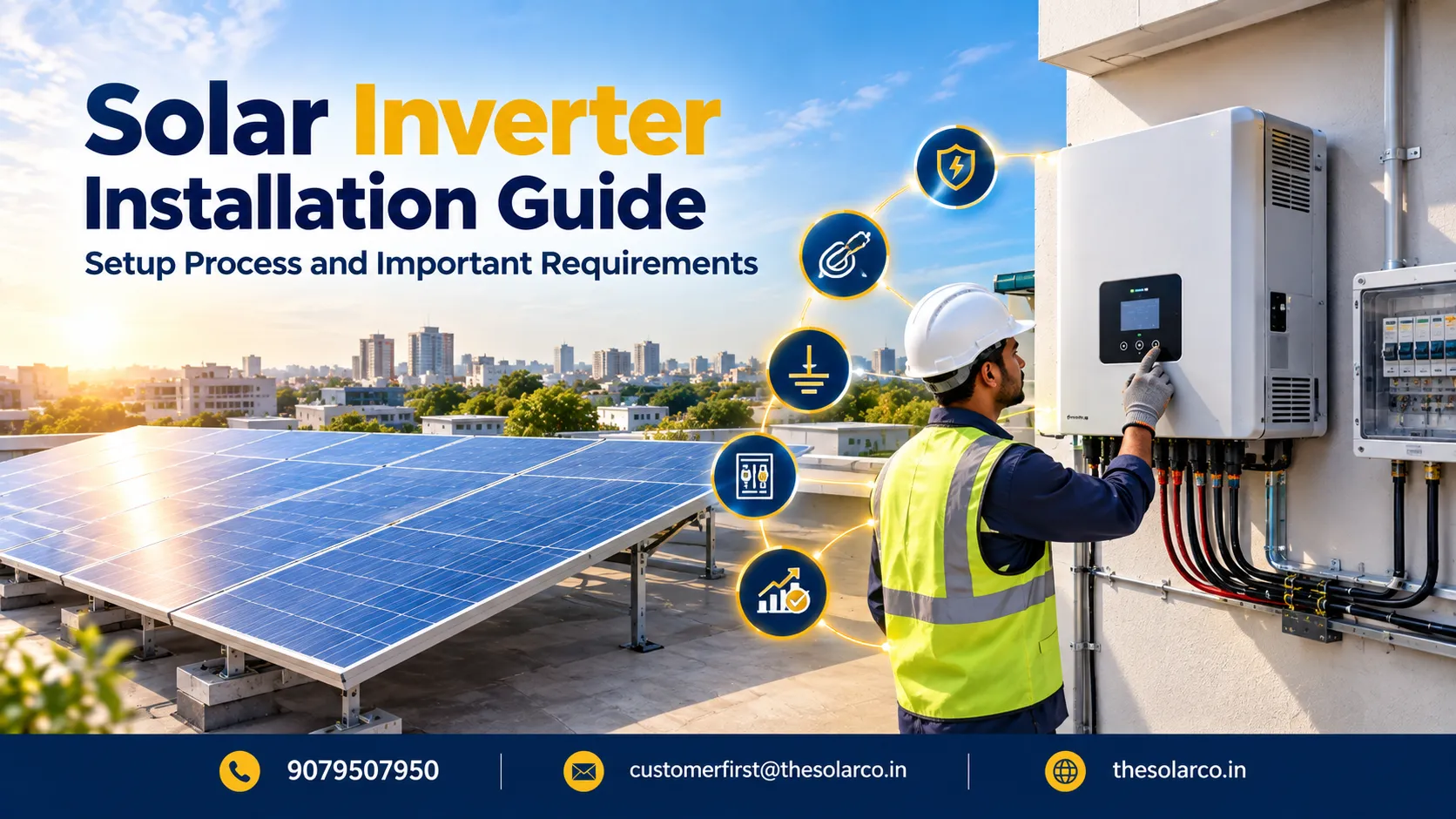
Solar inverter installation is one of the most important steps in setting up a reliable solar power system. The inverter converts the electricity generated by solar panels into usable AC power for your home or business and manages how energy flows between the solar array, loads, battery, and grid. As rooftop solar adoption continues to grow across India, proper inverter selection, installation, commissioning, and monitoring are becoming increasingly important.
In 2026, inverter installation is no longer just about connecting panels and switching the system on. Modern systems can include smart monitoring, advanced protection features, hybrid battery integration, and inverter-level generation data. India had crossed 50 lakh households benefiting from rooftop solar under PM Surya Ghar by August 2026, highlighting how quickly residential solar is scaling.
Importance of Proper Solar Inverter Installation
A high-quality inverter cannot deliver its expected performance if it is installed incorrectly. Installation quality affects energy conversion, equipment safety, system reliability, and long-term maintenance.
Impact of Installation Quality on Performance
The inverter should receive the correct DC voltage and current from the solar array while delivering stable AC output to the electrical system. Incorrect cable sizing, poor connections, excessive heat, or unsuitable placement can increase losses and cause avoidable faults.
A properly installed inverter also makes future troubleshooting easier. Modern smart inverters can provide performance information through digital monitoring platforms, allowing users and maintenance teams to identify abnormal generation or system alerts more quickly.
Safety Requirements During Setup
Solar installations involve both DC and AC electrical circuits. The inverter installation should therefore include appropriate isolation, earthing, surge protection, overcurrent protection, and correctly rated cables and connectors.
The installation team should also follow applicable electrical and utility requirements. DC connections should never be treated casually because solar modules can continue producing voltage whenever sufficient sunlight is available.
Importance of Professional Installation
Professional installation helps ensure that system design, electrical connections, protection devices, grid synchronization, and commissioning are handled correctly.
For residential, commercial, and industrial projects, an experienced EPC team can also coordinate site assessment, system design, documentation, installation, testing, and handover. This reduces installation errors and provides a clearer maintenance path throughout the system’s operating life.
Steps Involved in Solar Inverter Installation
A successful solar inverter installation follows a planned sequence rather than simply mounting the inverter and connecting cables.
Selecting a Suitable Installation Location
The inverter should be installed in a clean, dry, accessible location with sufficient airflow. Excessive heat can reduce electronic component life and may affect inverter performance.
Avoid locations exposed to unnecessary water, direct heat sources, or physical damage. Outdoor-rated equipment can be used where appropriate, but the exact protection level should match the installation environment.
The location should also leave enough working space around the inverter for inspection, servicing, and ventilation.
Electrical Wiring and Connection Process
The installation generally involves connecting the solar array to the inverter’s DC input and connecting the inverter’s AC output to the property’s electrical system.
Cable size, polarity, voltage range, connector compatibility, earthing, protection devices, and isolation arrangements must be checked before energizing the system.
For hybrid systems, additional connections may be required for battery storage and backup loads. This makes compatibility between the inverter, battery management system, solar modules, and other components especially important.
Testing the Inverter After Installation
Before commissioning, installers should verify the electrical connections and protection systems. The inverter can then be started according to the manufacturer’s commissioning procedure.
Important checks include:
- DC input voltage and polarity
- AC voltage and frequency
- Earthing and protection
- Inverter fault or warning codes
- Solar generation
- Grid synchronization
- Battery communication, where applicable
- Monitoring connectivity
The final system should be documented so the owner has a record of the installed equipment, configuration, and commissioning results.
Requirements Before Installing a Solar Inverter
Good inverter installation starts before the equipment reaches the wall. A site survey and system design should establish the technical requirements first.
Load Calculation and Inverter Sizing
Inverter sizing should be based on the solar array, expected electricity consumption, grid connection, and the type of system being installed.
For example, an on-grid system may have different requirements from a hybrid system designed to support selected loads during power outages.
The inverter’s maximum DC input, MPPT voltage range, maximum current, AC output capacity, and phase configuration should all be compatible with the solar system.
Oversizing or undersizing the inverter without considering the complete system design can affect energy harvesting and operational performance.
Space and Ventilation Requirements
Heat management is an important consideration because power electronics generate heat during operation. The installation area should provide adequate ventilation and comply with the equipment manufacturer’s clearance requirements.
Installers should also consider future maintenance. An inverter that is technically functional but difficult to access can increase service time and maintenance costs.
Compatibility With Solar System Components
A solar inverter should be compatible with the modules, mounting configuration, electrical system, battery, and grid requirements.
Modern installations may use high-power solar modules, bifacial modules, smart monitoring, and battery storage. Therefore, checking the inverter’s voltage and current limits is essential before installation.
For battery-based systems, communication compatibility between the inverter and battery management system is equally important.
Common Solar Inverter Installation Mistakes
Even a well-designed solar system can lose performance when basic installation details are overlooked.
Wrong Inverter Placement
Installing an inverter in an extremely hot, poorly ventilated, damp, or inaccessible area can create unnecessary operating problems.
A suitable location should balance protection, airflow, accessibility, and cable routing.
Incorrect Wiring and Connections
Loose terminals, incorrect polarity, undersized cables, incompatible connectors, and poorly routed wires can cause voltage drops, heating, faults, or equipment damage.
Connections should be checked before the system is energized, and cable routes should be organized to make future inspection easier.
Ignoring Safety Standards
Skipping earthing, surge protection, isolation, or other required protection measures can expose both people and equipment to unnecessary risks.
Solar installations should be completed by qualified professionals using correctly rated equipment and following applicable electrical and utility requirements.
Post-Installation Checks for Solar Inverter
Commissioning should not be considered the end of the installation. Regular monitoring helps identify performance changes before they become major problems.
Monitoring Inverter Performance
Modern smart inverters can provide generation data, alerts, operating status, and historical performance through connected monitoring platforms.
This is becoming increasingly relevant as India strengthens the role of inverter-level generation data in rooftop solar systems. MNRE issued a 2026 notice concerning compliance with guidelines for inverter-level generation data and its storage.
For system owners, monitoring makes it easier to spot unexpected drops in generation or recurring fault conditions.
Checking System Output and Efficiency
Compare actual solar generation with expected production while considering weather, season, shading, dust, and electricity demand.
A sudden and unexplained reduction in output can indicate issues such as inverter faults, wiring problems, shading changes, module performance issues, or communication failures.
Regular performance reviews can help identify problems earlier and reduce avoidable generation losses.
Maintaining the Inverter for Long Life
Solar inverters require less routine attention than many mechanical systems, but they should not be ignored. Periodic inspections can include checking ventilation, electrical connections, error logs, mounting condition, cables, and monitoring communication.
For larger residential, commercial, and industrial systems, a structured annual maintenance plan can provide additional protection against unexpected downtime.
Final Takeaway
A successful solar inverter installation depends on more than choosing a high-efficiency inverter. Correct sizing, suitable placement, compatible components, safe electrical connections, professional commissioning, and continuous monitoring all contribute to reliable solar generation.
India’s rapidly expanding rooftop solar market makes installation quality increasingly important. With more households and businesses adopting solar, modern inverter systems are also becoming smarter and more connected. Choosing a professional EPC partner can help ensure that the inverter is correctly integrated into the complete solar system from design and installation through testing and long-term maintenance.
The right installation today can improve system reliability, simplify future servicing, and help your solar investment deliver consistent performance for years.