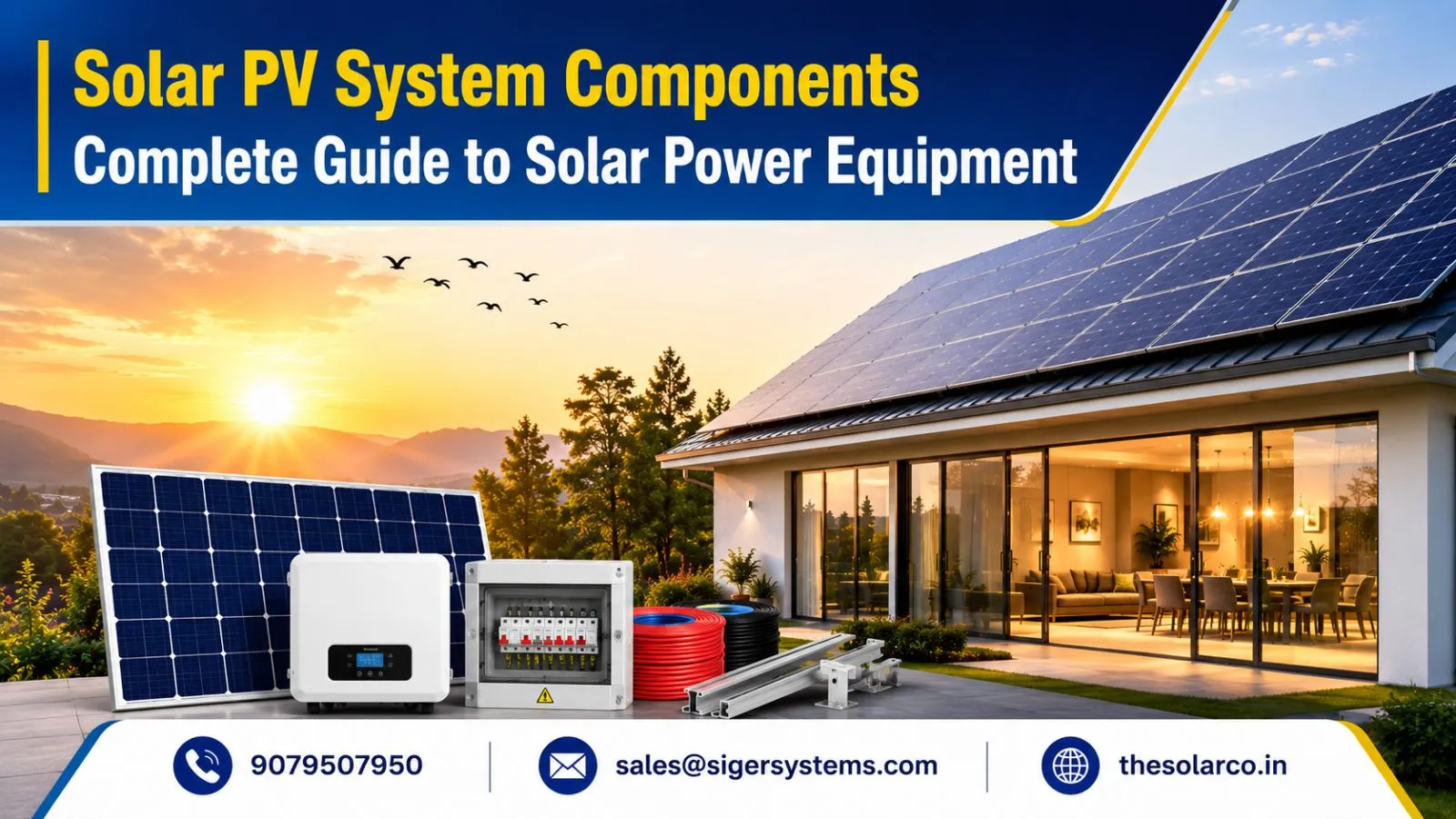
Solar PV system components work together to convert sunlight into usable electricity for homes, offices, commercial buildings and industrial facilities. Although solar panels are the most visible part of an installation, a complete system also requires an inverter, mounting structure, electrical cables, protection devices and monitoring equipment. Choosing the right combination of components can improve energy generation, electrical safety, system reliability and long-term operating performance. For Indian property owners considering solar energy, understanding these components makes it easier to compare quotations, evaluate equipment quality and plan a suitable rooftop solar installation.
What Are the Main Solar PV System Components?
Solar Panels and Their Role in Electricity Generation
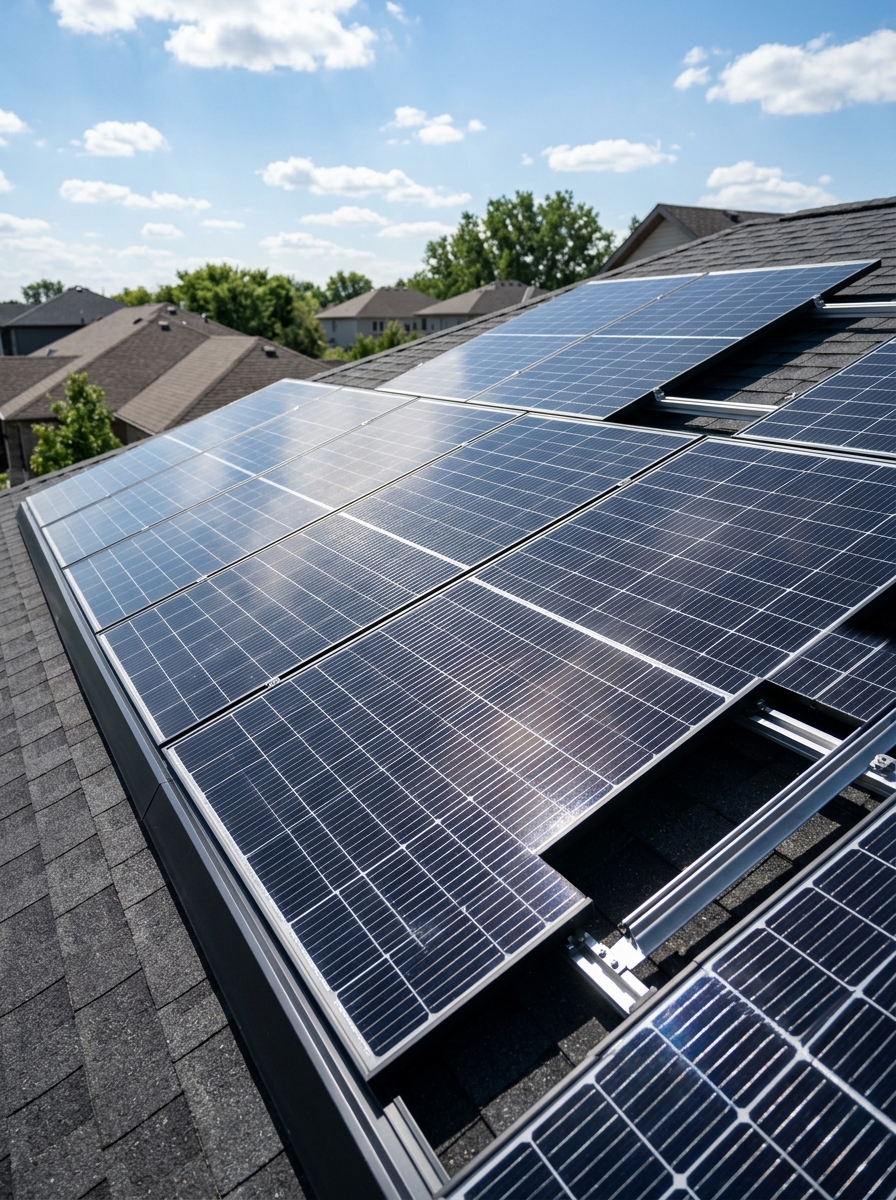
Solar panels, also called photovoltaic (PV) modules, convert sunlight into direct current (DC) electricity through the photovoltaic effect. Multiple photovoltaic cells are connected within each module to generate the required electrical output.
When comparing solar panel components and specifications, consider rated power, module efficiency, temperature performance, product warranty, performance warranty and expected degradation. Higher-efficiency modules can be useful when rooftop space is limited, but efficiency alone does not determine the overall value of a solar installation.
Panel selection should also account for the roof’s usable area, orientation, shading and structural suitability. In dusty environments such as Jaipur and other parts of Rajasthan, suitable installation design and regular cleaning can help maintain expected generation.
Solar Inverter, Mounting Structure and Other Essential Equipment
A solar inverter converts the DC electricity generated by panels into alternating current (AC), which most household and commercial appliances use. It also manages the electrical connection between the solar array and the property’s power system.
The main inverter types include:
- String inverters: Commonly used in residential and commercial installations, with multiple panels connected in strings.
- Microinverters: Installed at individual panels and potentially useful where roof layouts or shading patterns vary.
- Hybrid inverters: Designed to manage solar generation alongside compatible battery storage and grid electricity.
The solar mounting structure supports the panels and maintains their intended position. It must suit the roof type, panel dimensions, wind loads, corrosion conditions and installation requirements.
Other essential equipment includes distribution boards, isolators, connectors, earthing arrangements and electrical protection devices. Together, these components form a complete system rather than a collection of independent products.
How Does a Rooftop Solar System Work?
From Solar Generation to Electricity for Your Property
A typical grid-connected rooftop solar system follows a straightforward process:
- Sunlight reaches the photovoltaic modules.
- The modules generate DC electricity.
- DC cables carry electricity to the inverter.
- The inverter converts DC into AC electricity.
- The property’s electrical distribution system supplies power to appliances and equipment.
- Surplus electricity may be exported to the grid, depending on the applicable metering arrangement.
When solar generation is insufficient, electricity can be drawn from the grid. This commonly happens at night or during periods of limited sunlight.
An on-grid system generally does not provide backup during a grid outage unless it includes suitable backup equipment specifically designed for that purpose. This is an important distinction for homeowners who expect their solar installation to power essential appliances during power cuts.
On-Grid, Off-Grid and Hybrid Solar System Components
The equipment required depends on the type of solar system being installed.
An on-grid solar system connects to the electricity grid. Its main components include solar modules, an inverter, mounting structures, wiring, protection equipment and the required metering arrangement. Batteries are generally unnecessary unless additional storage or backup functionality is planned.
An off-grid solar system operates independently of the utility grid and typically requires batteries to store electricity for use when solar generation is unavailable. A compatible charge controller or integrated power-management equipment may also be needed, depending on the system design.
A hybrid solar system combines solar generation, grid connectivity and battery storage. It can offer greater flexibility, but its additional equipment and installation costs should be evaluated against the property’s backup and energy-management requirements.
Choosing the correct configuration starts with understanding daily electricity consumption, backup expectations, available roof space and budget.
Which Solar Equipment and Protection Devices Should You Choose?
Solar Cables, Earthing and Electrical Protection
Solar cables and protection devices are essential for transporting electricity safely and reducing electrical risks. Their specifications must match the system’s voltage, current, installation environment and applicable technical requirements.
Important components include:
- DC cables and connectors: Carry electricity from the solar modules to the inverter.
- AC cables: Connect the inverter to the property’s electrical distribution system.
- DC and AC isolators: Allow the relevant electrical circuits to be disconnected for maintenance or emergencies.
- Fuses and circuit breakers: Help protect suitable circuits against electrical faults.
- Surge protection devices: Help protect equipment against specified transient voltage surges.
- Earthing and bonding: Provide essential electrical safety measures when correctly designed and installed.
- Distribution and combiner boxes: Organise electrical connections and accommodate protection equipment where required.
The exact arrangement depends on system capacity, inverter configuration, local requirements and the installation design. Cable sizing, protective-device ratings and earthing should be determined by qualified professionals rather than selected through guesswork.
In Rajasthan, mounting structures and outdoor electrical equipment should also be suitable for local heat, dust, wind and weather exposure.
Monitoring Systems, Net Meters and Battery Storage
Monitoring equipment helps property owners track electricity generation and identify changes in system performance. Depending on the inverter and monitoring platform, users may be able to view daily generation, monthly production, system alerts and historical performance through a mobile application or web dashboard.
A sudden decline in generation compared with similar weather conditions may indicate shading, dirt accumulation, equipment faults or another issue that requires investigation.
A bidirectional or other approved meter may be required for a grid-connected installation, depending on the applicable utility and metering arrangement. It records electricity flows as required by the relevant billing setup.
Battery storage is an additional component rather than a universal requirement. It stores electricity for later use but introduces additional costs, equipment requirements and potential replacement expenses.
When evaluating equipment, compare specifications, compatibility, applicable certifications, warranty conditions and local service support. You can explore solar panels, inverters and related equipment to understand the product categories relevant to a solar installation.
How to Select the Right Solar PV Components for Long-Term Performance
Check Equipment Quality, Compatibility and Installation Requirements
Selecting equipment solely on the basis of the lowest price can create problems over the system’s operating life. A better approach is to evaluate the complete installation, including product quality, compatibility, warranties, installation workmanship and after-sales support.
Before approving a proposal, check the following:
- Panel specifications, warranties and manufacturer documentation.
- Inverter capacity, compatibility and monitoring features.
- Mounting structure strength and suitability for the roof.
- Cable ratings, connectors and electrical protection arrangements.
- Earthing, surge protection and required safety provisions.
- Metering requirements and applicable utility approvals.
- Maintenance access, installation scope and service commitments.
For grid-connected residential systems, verify applicable technical requirements and eligibility conditions before finalising equipment, especially if government incentives are relevant to the project.
Also consider future energy requirements. A household planning to install an electric vehicle charger or battery storage may benefit from discussing compatible equipment and future expansion during the initial design stage.
Improve Solar System Reliability Through Proper Design and Maintenance
Even high-quality solar equipment can underperform if it is poorly installed, incorrectly sized or exposed to avoidable shading. Professional system design should account for electricity demand, roof orientation, structural capacity, expected solar generation and environmental conditions.
Regular inspection can help identify damaged cables, loose connections, corrosion, mounting issues and inverter alerts. Panel cleaning should follow the manufacturer’s recommendations and local environmental conditions. Electrical inspection and repairs should be handled by qualified professionals.
Property owners should also request clear documentation covering the installed equipment, warranty terms, system design and maintenance procedures.
For homeowners planning a rooftop solar installation in Jaipur, evaluating the complete system rather than individual components can help establish a more reliable basis for comparing installation proposals.
The objective is to balance initial investment, expected electricity generation, safety and long-term operating costs. A well-designed solar PV system combines suitable panels, a compatible inverter, durable mounting, correctly specified electrical equipment and appropriate monitoring to deliver dependable performance.
Solar PV system components serve different purposes, but their effectiveness depends on how well they work together. Understanding their functions and selection requirements helps homeowners and businesses make informed decisions and get more value from their solar investment.