The PM Surya Ghar Yojana is a Government of India initiative designed to make residential rooftop solar more accessible through financial assistance for eligible households. By installing solar panels, homeowners can generate electricity from sunlight, reduce their dependence on grid power and potentially lower long-term electricity expenses.
For many families, the initial cost of a solar installation can be a major concern. The scheme addresses part of this challenge by providing Central Financial Assistance (CFA) for eligible residential rooftop solar systems. However, the actual benefits depend on system capacity, electricity consumption, local regulations and successful completion of the application and verification process.
This guide covers the scheme’s benefits, subsidy structure, eligibility requirements, application process and important considerations before installing a rooftop solar system. It also explains how homeowners can evaluate solar equipment, installation quality and long-term savings before making an investment.
What Is PM Surya Ghar Yojana and How Does It Work?
Understanding the Residential Rooftop Solar Scheme
PM Surya Ghar: Muft Bijli Yojana is a national programme launched in February 2024 to encourage rooftop solar adoption among residential electricity consumers. Its broader objective is to support rooftop solar installations across one crore households while contributing to India’s renewable energy transition.
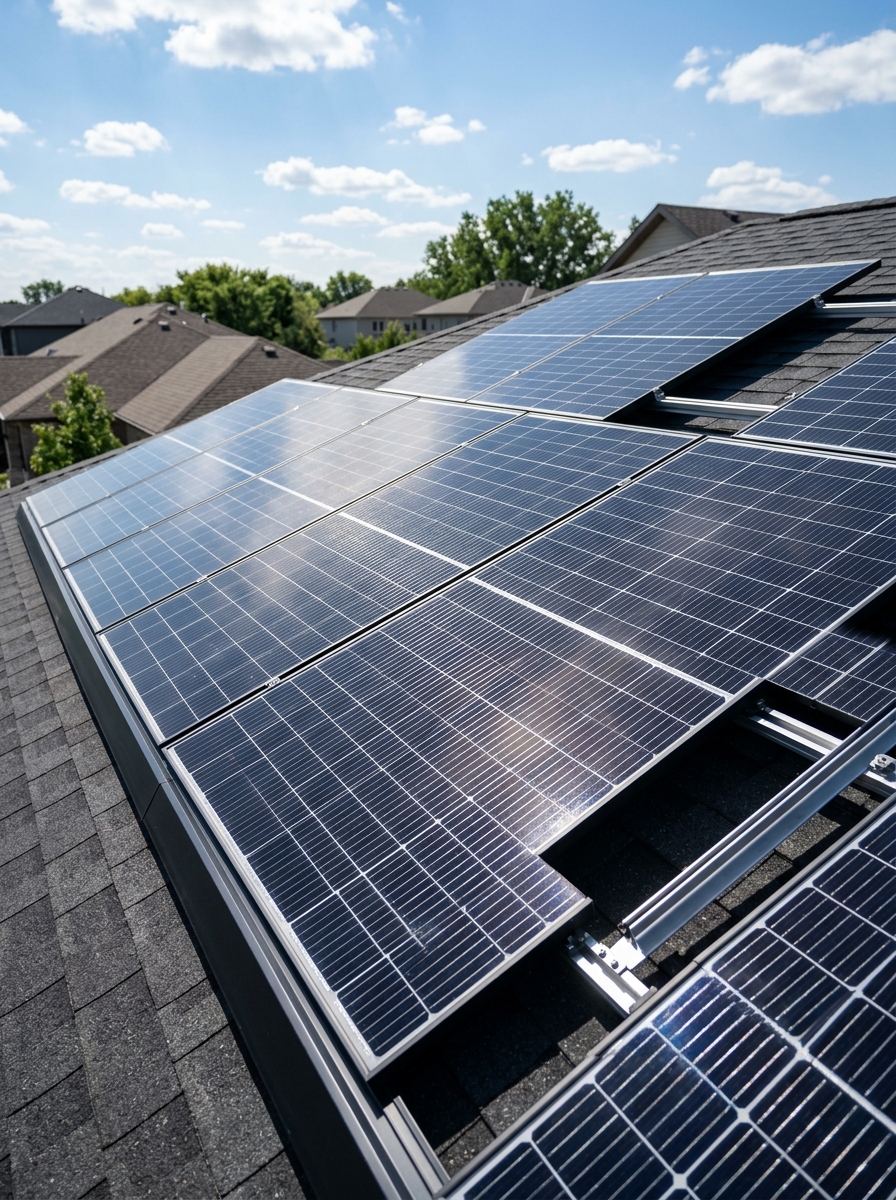
Unlike large solar power plants that generate electricity for distribution across the grid, residential rooftop systems allow households to generate electricity at the point of consumption. Solar panels convert sunlight into electricity, while an inverter converts the generated power into a form suitable for household use.
A grid-connected system can supply electricity to compatible household appliances during periods of solar generation. Depending on the approved metering arrangement, surplus electricity may be exported to the grid. At night or when solar generation is insufficient, the household generally continues to draw electricity from the grid.
The scheme makes eligible installations more affordable through central financial assistance. Homeowners must follow the prescribed application process and use a vendor eligible under the programme to ensure their installation qualifies for the applicable benefits.
Objectives and Benefits for Indian Households
The scheme aims to increase clean electricity generation at the household level while making solar adoption financially more accessible. Its key objectives include:
- Encouraging residential rooftop solar installations.
- Reducing household dependence on grid electricity.
- Supporting renewable energy generation and India’s clean energy goals.
- Increasing consumer awareness of solar technology.
- Creating opportunities in solar manufacturing, installation and maintenance.
For homeowners, the main attraction is the possibility of reducing electricity expenses over time. The amount saved will vary according to monthly consumption, system capacity, sunlight exposure, electricity tariffs and how much solar electricity is consumed directly.
Households should therefore assess their actual electricity bills before choosing a system. A properly sized installation can provide better value than selecting capacity based only on the maximum available subsidy.
PM Surya Ghar Subsidy, Eligibility and Key Requirements
How Much Subsidy Is Available Under PM Surya Ghar Yojana?
The central subsidy structure for eligible residential rooftop solar systems is based on the installed capacity, subject to the scheme’s applicable conditions and limits.
The announced central financial assistance for general-category states is:
| Eligible system capacity | Central subsidy |
|---|---|
| 1 kW | ₹30,000 |
| 2 kW | ₹60,000 |
| 3 kW or above | ₹78,000 maximum |
Under this structure, assistance is calculated at ₹30,000 per kW for the first 2 kW and ₹18,000 for the additional 1 kW. No additional central subsidy is provided for capacity above the 3 kW limit under this standard residential structure. Different provisions may apply to specified special-category states, so applicants should confirm the amount applicable to their location.
The subsidy reduces the eligible installation cost; it does not necessarily cover the entire price of a solar system. Equipment, mounting structures, wiring, installation services and other project requirements can affect the final quotation.
Homeowners should compare itemised proposals and confirm that the selected system and vendor comply with the scheme requirements. For information about available equipment, components and solar solutions, explore solar products and system components.
Who Is Eligible and What Should Applicants Prepare?
The scheme is intended for eligible residential electricity consumers who meet the prescribed requirements. The general eligibility conditions include:
- The applicant must be an Indian citizen.
- The household must have a valid residential electricity connection.
- The roof or installation location must be suitable for solar panels.
- The applicant must meet the applicable subsidy conditions, including restrictions on previously received solar subsidies for the same installation.
- The installation must follow the required technical, vendor and verification procedures.
Applicants should keep their electricity consumer details, current bill, bank account information and other documents requested by the portal ready. The information submitted should match the relevant electricity connection and beneficiary records.
Roof suitability is another important factor. Available space, structural condition, shade from nearby buildings or trees, panel orientation and safe maintenance access can all affect system performance.
People living in rented properties or shared buildings should confirm their roof-use permission, electricity-consumer eligibility and any additional requirements before proceeding. Eligibility should be verified through the official programme portal and the relevant electricity distribution company rather than assumed from general online advice.
How to Apply for PM Surya Ghar Yojana and Install Solar Panels
Step-by-Step Application and Subsidy Process
The application is completed through the official PM Surya Ghar portal. Although the exact sequence may vary with local distribution-company procedures, the process generally includes these stages:
- Register on the portal: Select the state and electricity distribution company, then enter the required consumer and contact details.
- Submit the application: Provide the requested information and apply for a residential rooftop solar installation.
- Check the required approval: Follow the applicable feasibility and technical approval process before installation.
- Choose an eligible vendor: Review the available vendors and compare their equipment, warranties, installation scope and service support.
- Complete the installation: Have the approved system installed according to applicable technical and safety requirements.
- Submit installation details: Provide the required system information and apply for the applicable meter or grid-connection procedure.
- Complete inspection and commissioning: Follow the distribution company’s verification process and obtain the required commissioning confirmation.
- Submit subsidy details: Provide the requested bank information and supporting documents through the prescribed process.
The subsidy is processed after the required installation, commissioning and verification conditions have been fulfilled. Processing time can depend on the completeness of the application and the relevant administrative steps. Applicants should track their status through the official portal and respond promptly to requests for corrections or additional information.
Avoid paying anyone who guarantees approval or promises immediate subsidy release outside the official process.
Choosing the Right System and Installation Partner
Receiving a subsidy is only one part of a successful solar project. The system must also suit the property’s electricity demand and rooftop conditions.
Start by reviewing several months of electricity bills to understand consumption patterns. Consider whether appliances are used mainly during the day or evening, as this influences how much generated electricity can be consumed directly.
Next, assess the proposed equipment. Solar panel efficiency, product warranties, inverter compatibility, mounting quality, electrical protection and installation workmanship all affect performance and reliability. Ask the vendor for an itemised quotation, expected generation estimate, warranty documentation and details of after-sales service.
A professional site assessment should identify shading, roof constraints, cable routes, earthing requirements and the safest panel layout. In Jaipur and other parts of Rajasthan, strong sunshine can support solar generation, but dust accumulation, seasonal weather and rooftop conditions still make suitable installation and maintenance important.
Homeowners comparing residential rooftop solar solutions should evaluate the complete proposal rather than choosing solely on the lowest quoted price. A reliable installation partner should clearly explain the equipment being supplied, the scope of work, applicable approvals and the responsibilities involved in maintaining the system.
Maximising Solar Savings and Understanding the Future of Rooftop Energy
Estimating Electricity Savings and Maintaining Performance
Solar savings are not identical for every household. They depend on the amount of electricity generated, the share consumed at home, grid electricity tariffs, export-credit arrangements and the system’s ongoing performance.
A larger system may generate more electricity, but it is not automatically the most economical option for every property. The capacity should be selected according to consumption, available roof space, applicable regulations and financial considerations.
Before installation, ask for a realistic generation estimate based on the roof’s location, orientation, shading and system specifications. Treat projected savings as estimates rather than guaranteed results. Electricity bills may still include fixed charges or other applicable fees, even when solar generation substantially reduces grid consumption.
Regular maintenance helps protect system performance. Homeowners should monitor generation, keep an eye on inverter alerts and arrange safe cleaning when dust or debris affects the panels. Any electrical inspection or repair should be carried out by a qualified professional. The system’s warranty and maintenance instructions should be retained for future reference.
Emerging Opportunities in Residential Solar Energy
Rooftop solar is increasingly being considered alongside other household energy technologies. Battery storage can store eligible surplus generation for later use, while smart monitoring tools can help homeowners understand consumption and production patterns. Electric vehicle charging may also become part of a home’s wider energy plan.
These additions involve extra costs and should be evaluated separately. Standard grid-connected solar installations generally do not provide backup power during a grid outage unless they include suitable backup-capable equipment and the required electrical configuration.
For households planning a long-term energy investment, it makes sense to consider future electricity needs without purchasing unnecessary capacity today. A carefully designed solar system, quality components and dependable maintenance can help homeowners make better use of the available rooftop space.
Conclusion
PM Surya Ghar Yojana offers eligible residential electricity consumers an opportunity to reduce the upfront cost of adopting rooftop solar. The announced central subsidy can reach ₹78,000 for qualifying systems of 3 kW or above in general-category states, subject to the scheme’s applicable conditions.
However, the subsidy alone should not determine the investment. Homeowners should verify eligibility, understand the application process, assess their electricity consumption, compare equipment and select an eligible installation vendor. Roof suitability, system quality, commissioning requirements and after-sales support are equally important.
By combining accurate planning with a compliant installation, households can make a more informed decision about solar power and its potential long-term benefits. Before applying, always check the latest official scheme guidance and local electricity distribution-company requirements, as procedures and applicable provisions may change.