
Before installing a rooftop solar system, understanding your solar panel roof requirements can help you choose the right system size, plan panel placement and avoid unnecessary installation costs. A suitable roof needs adequate sunlight, sufficient usable space, appropriate structural strength and a mounting solution designed for its surface.
However, not every rooftop is equally suitable for solar installation. Roof age, direction, tilt, shading, drainage, accessibility and existing damage can all influence the final design. These factors are especially important because solar panels and their mounting structures are intended to remain in place for many years.
For homeowners and businesses planning rooftop solar in India, a professional site assessment can help determine whether the roof is ready for installation and which configuration is practical for the property.
Essential Solar Panel Roof Requirements
Roof Condition and Structural Strength
The roof should be in suitable condition before solar panels are installed. Existing cracks, water leakage, damaged tiles, corroded metal sheets or deteriorating waterproofing may need attention before installation begins.
Solar panels and their mounting structures add load to the building. The roof must also be able to accommodate relevant wind forces and other design loads. Suitability depends on the building’s construction, roof structure, mounting arrangement and local conditions.
A qualified professional should assess structural capacity where required, particularly for older buildings, large commercial installations and roofs showing signs of deterioration.
Before approving a roof for solar, check:
- Roof age and general condition
- Signs of cracks, corrosion or water leakage
- Structural suitability for the proposed system
- Existing waterproofing and drainage
- Appropriate mounting locations
- Safe access for installation and future maintenance
If a roof requires major repairs or replacement soon, completing that work before installing solar panels may be more practical than removing the system later.
Sunlight Exposure and Roof Suitability
A suitable roof should receive sufficient sunlight across the periods when solar electricity is needed. Trees, nearby buildings, parapet walls, water tanks, chimneys and other rooftop equipment can cast shadows that reduce energy generation.
Shading changes throughout the day and across seasons. An area that appears sunny at midday may experience significant shade in the morning or late afternoon.
A professional site assessment should therefore consider the roof’s sunlight exposure throughout relevant periods, rather than relying on a single visual check. If shading cannot be avoided, the system designer can evaluate alternative panel placement or compatible electrical configurations.
For properties considering residential rooftop solar solutions, assessing sunlight exposure and roof condition together helps establish a more realistic system design.
Solar Panel Roof Space, Direction and Angle
How Much Roof Space Do Solar Panels Need?
The rooftop area required depends on the planned system capacity, panel dimensions, panel efficiency and installation layout. A larger system generally needs more usable space, but the total roof area alone does not determine how many panels can be installed.
Installers must account for access paths, roof edges, shading, obstructions, mounting structures and other site-specific requirements. Some areas may be unsuitable for panels even if they appear physically empty.
As an initial planning step, identify the roof sections that receive good sunlight and can accommodate the proposed layout. The installer can then calculate the number of panels and suitable system capacity.
Higher-efficiency panels may help accommodate a desired capacity on a smaller roof, although the final result also depends on product dimensions and installation constraints.
Choosing the Right Roof Direction and Tilt
Panel orientation and tilt affect how sunlight reaches the solar modules. The preferred configuration depends on geographic location, roof geometry, seasonal sunlight patterns, shading and whether the system is intended to optimise annual generation or meet particular consumption patterns.
In India, south-facing panels are often a useful starting point for evaluating annual solar generation, but this is not a universal requirement. East- or west-facing arrangements can also be practical depending on the property and its energy-use pattern.
Similarly, there is no single tilt angle that suits every rooftop. Panels installed on flat roofs may use mounting structures to create an appropriate angle, while panels on sloped roofs may follow the existing roof geometry.
For a property in Jaipur, the installer should assess actual site conditions and calculate a suitable orientation and tilt rather than relying on a generic recommendation.
Shading, Obstructions and Panel Layout
A good layout balances sunlight exposure, available space, installation safety and long-term access. Panels should not simply be fitted into every open section of the roof.
During layout planning, consider:
- Water tanks, chimneys and ventilation equipment
- Trees and neighbouring buildings
- Parapet walls and other sources of shade
- Roof access routes and maintenance areas
- Drainage paths and roof openings
- Cable routing and inverter location
The effect of shading depends on the system’s electrical configuration. Appropriate string design, module-level electronics or alternative panel placement may reduce some shading-related losses, depending on the equipment selected.
A professional layout helps establish realistic capacity while keeping the installation accessible and maintainable.
Roof Types, Mounting Structures and Installation Preparation
Can Solar Panels Be Installed on Different Roof Types?
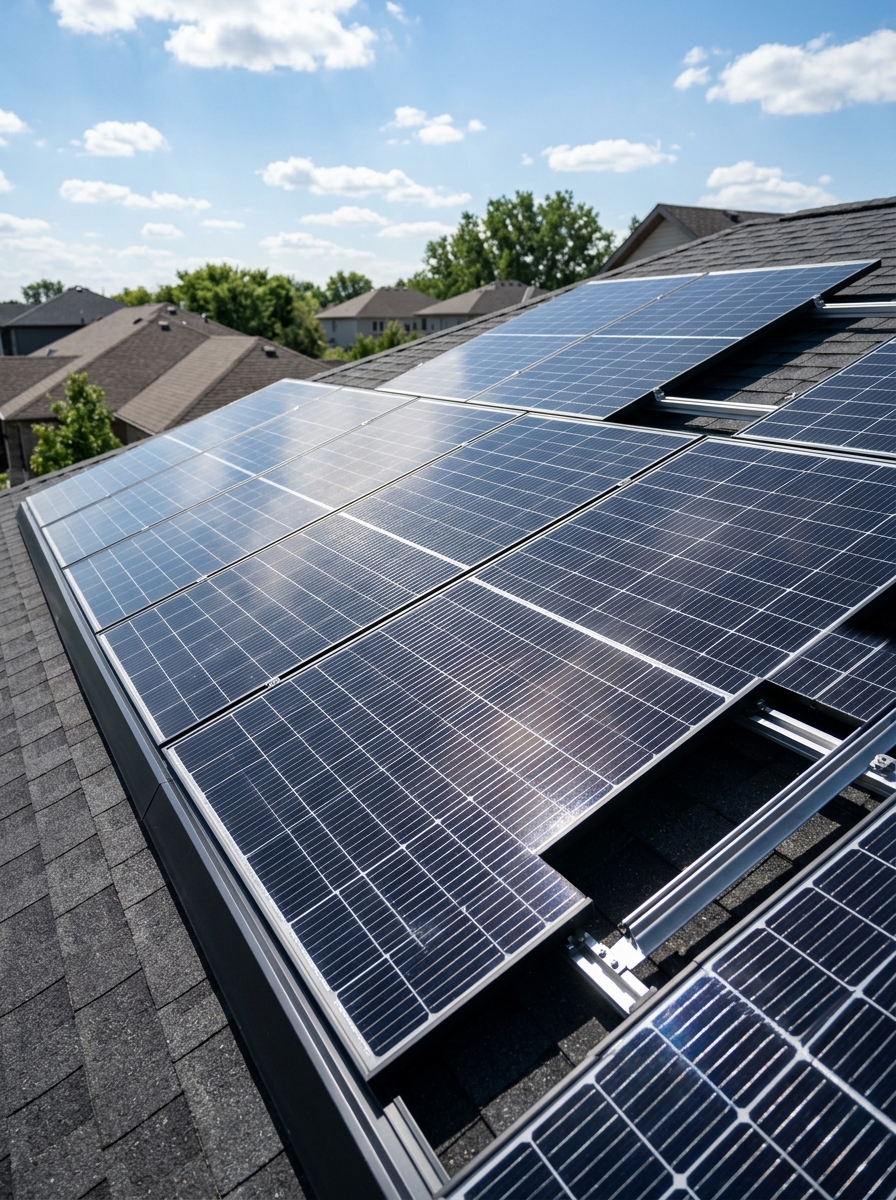
Solar panels can be installed on many roof types when the roof structure and mounting method are suitable. The installation approach differs according to the surface, slope, structural design and environmental conditions.
| Roof type | Important considerations |
|---|---|
| Flat concrete roof | Mounting angle, structural loading, waterproofing and access |
| Sloped roof | Roof condition, secure attachment and suitable mounting hardware |
| Metal roof | Sheet condition, structural support, attachment method and corrosion protection |
| Tile roof | Tile condition, suitable mounting points and protection against water leakage |
| Industrial roof | Structural assessment, wind loads, access and equipment layout |
A roof type should not be approved for solar installation based on appearance alone. The mounting method must be compatible with the roof and engineered for the installation conditions.
Mounting, Waterproofing and Safety
Mounting structures secure panels to the building and help maintain the intended arrangement. The selected system should account for roof material, wind exposure, panel configuration and the required installation angle.
Waterproofing is equally important. Poorly planned roof penetrations or unsuitable attachment methods can contribute to leakage. Installers should use appropriate mounting components and follow the roofing and equipment manufacturers’ requirements.
Installation planning should also address safe roof access, electrical protection, cable management, earthing and maintenance clearance. Rooftop and electrical work should be carried out by trained professionals using suitable safety procedures.
For equipment selection and system planning, review the available solar products and system components alongside the requirements of the specific project.
Preparing the Roof Before Installation
A pre-installation assessment can identify problems that are easier to resolve before the panels are fitted. Depending on the site, preparation may include repairing leaks, replacing damaged roofing, checking structural suitability, clearing unnecessary obstructions and finalising cable routes.
The installer should also determine where the panels, inverter and related equipment will be located. Planning these details in advance can reduce installation complications and help preserve access to important roof areas.
For commercial and industrial buildings, additional engineering checks may be appropriate because of the installation’s size, roof design and operational requirements.
Solar Roof Inspection, Maintenance and Long-Term Planning
Pre-Installation Roof Assessment Checklist
Before proceeding with installation, use the following checklist to organise the assessment:
-
The roof is in suitable condition, with major damage addressed.
-
Structural suitability has been assessed where required.
-
Available panel space has been measured.
-
Sunlight exposure and shading have been evaluated.
-
Roof direction and tilt have been considered in the system design.
-
A compatible mounting method has been selected.
-
Waterproofing and drainage requirements have been addressed.
-
Safe installation and maintenance access has been planned.
-
Cable routes and equipment locations have been identified.
-
Relevant approvals and local requirements have been checked.
This checklist is a planning aid, not a substitute for a site inspection or structural assessment.
Maintaining the Roof After Solar Installation
Roof maintenance remains important after the panels are installed. Periodic checks should consider visible roof damage, drainage, mounting components and any signs of leakage. Solar generation data can also help identify unexpected performance changes that may require further investigation.
Do not climb onto the roof or touch electrical components if access is unsafe. Arrange a qualified inspection if there are signs of structural movement, damaged mounting hardware, exposed wiring or water ingress around installation points.
Where roof repairs are needed later, coordinate the work with a qualified solar service provider so that the panels and electrical equipment can be handled safely.
Planning for Long-Term Solar Performance
The best roof for solar is not necessarily the largest or the one facing a particular direction. It is the roof that can safely accommodate an appropriately designed system with suitable sunlight exposure, practical access and manageable maintenance requirements.
Before choosing a system capacity, consider electricity consumption, usable roof area, shading, structural condition and the expected life of the existing roof. A professional assessment can help align these factors with realistic energy-generation expectations.
For homeowners and businesses in Jaipur and across India, careful roof planning can make rooftop solar installation more practical and help avoid preventable complications. Evaluating the complete installation environment before purchasing equipment is an important step towards a reliable solar investment.